Crochet vs Knitting: What Is the Difference?
Crochet usually works one active loop with a hook; knitting holds many live loops across two needles. That structural difference changes the process, fabric and best uses.
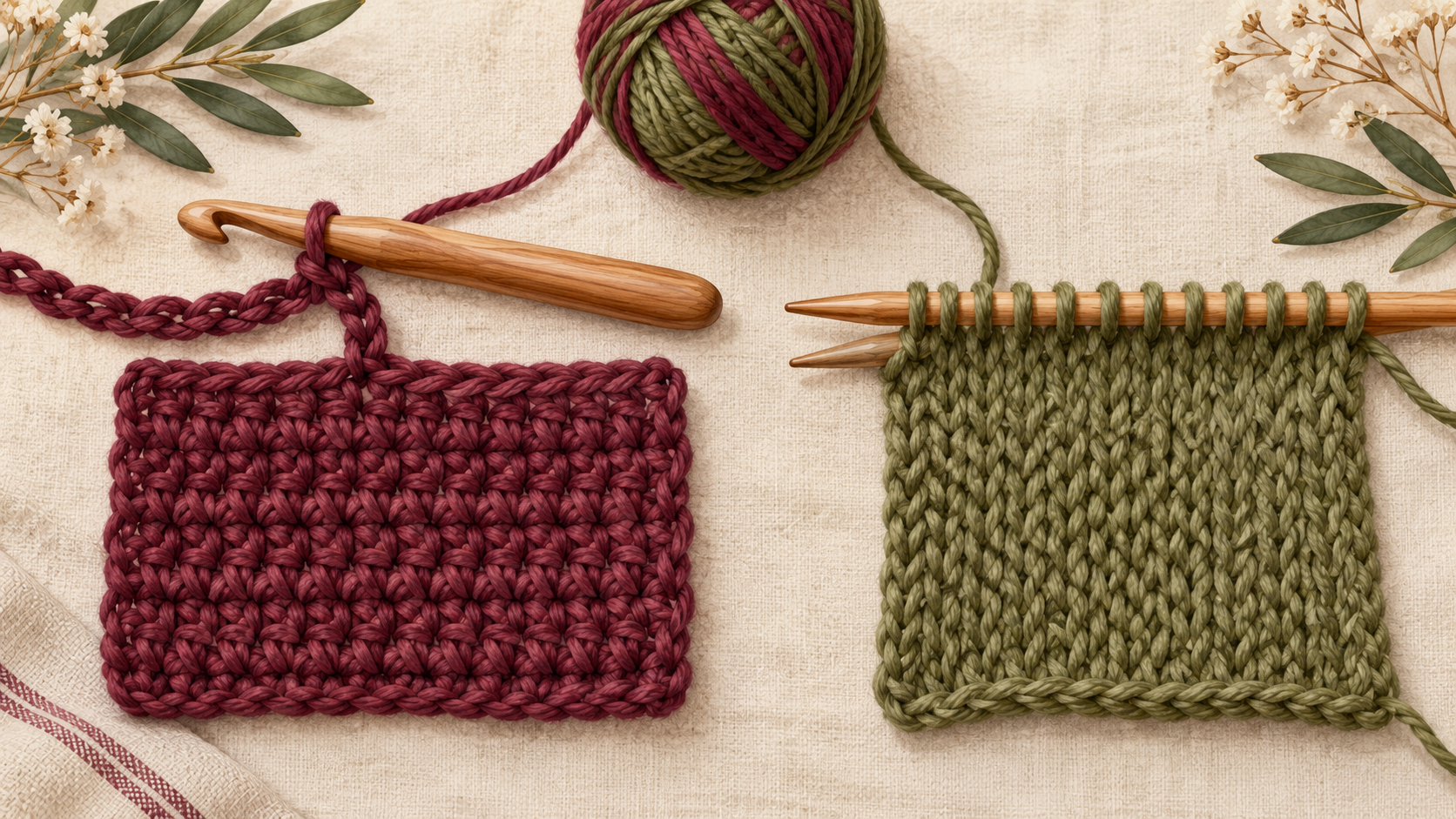
The shortest answer: tools and live loops
Crochet uses one hooked tool and usually advances from a single active loop. Knitting normally uses two needles and keeps many live loops open across a row. This changes both hand movement and the architecture of the fabric.
Neither method is universally better. The useful question is which structure gives the drape, stability, stretch and making experience required by a particular project.
How the fabrics behave
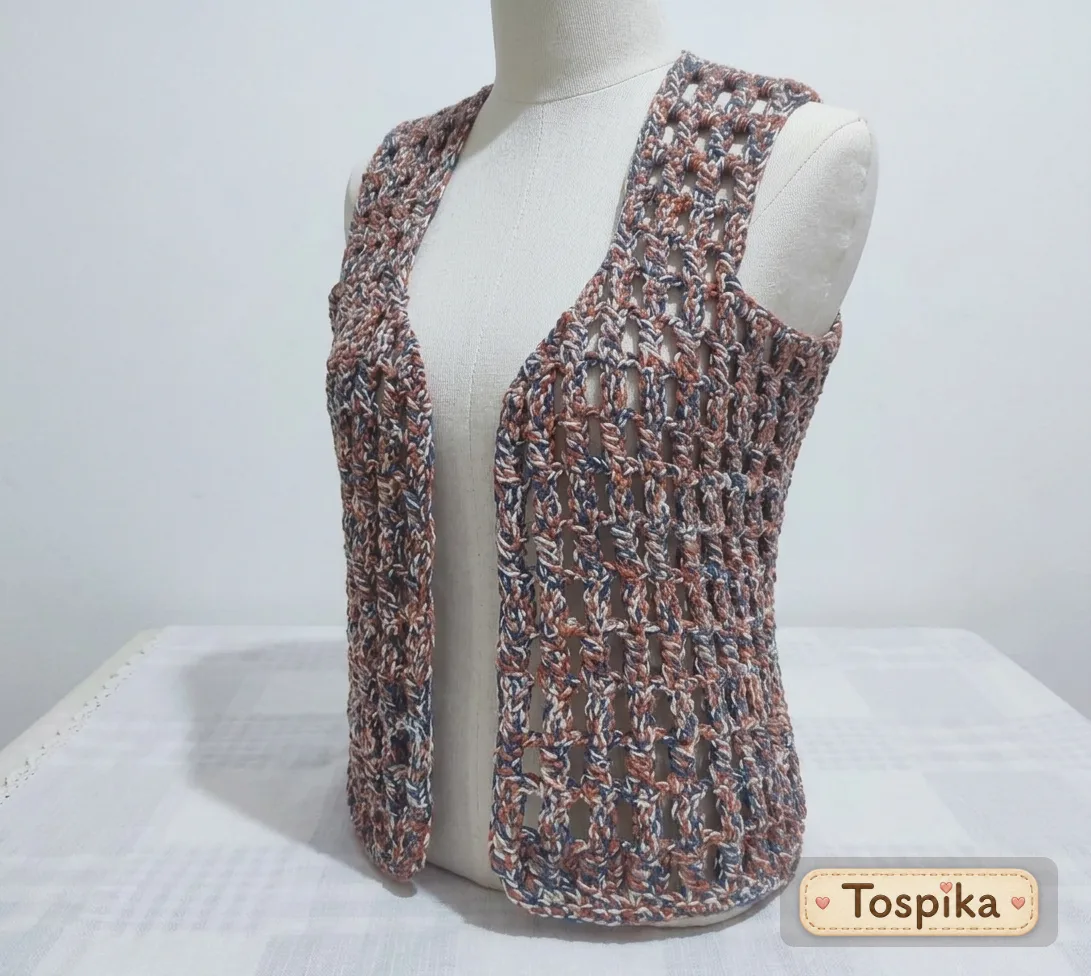
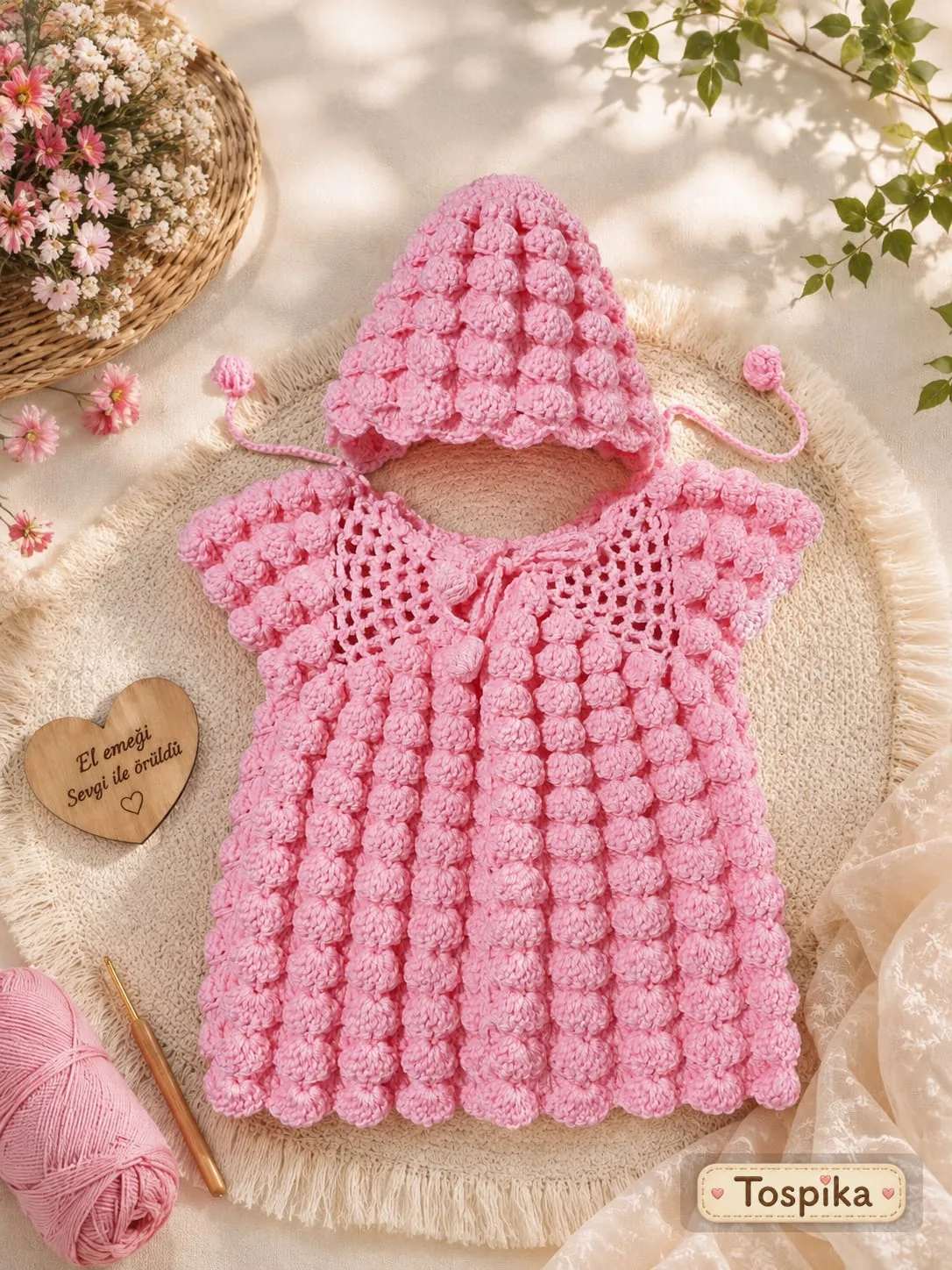
Crochet can create firm, sculptural and highly textured fabric, which is useful for bags, baskets, toys and motifs. Lace and mesh stitches can also make it open and light. The hook can enter many parts of an existing stitch, making three-dimensional shaping especially flexible.
Basic knitted structures often create fluid, elastic fabric suited to garments, ribbing, socks and close-fitting accessories. Fibre, yarn weight, tool size, stitch pattern and individual tension can reverse broad expectations, so the actual swatch matters more than a rule of thumb.
Mistakes and repair
Because crochet usually has one active loop, a maker can often unravel to the error and place the loop back on the hook. Modular crochet may confine a mistake to one motif.
Knitting holds a full row of live stitches. A dropped stitch can travel downward, although it can often be laddered back up with a crochet hook. Beginners may find live-stitch management demanding, while experienced knitters can repair a column without undoing the whole piece.
Speed and yarn use
There is no universal winner for speed. Tall crochet stitches may cover area quickly, while a practised knitter can work plain fabric at a fast rhythm. Pattern complexity, yarn, tool size and the maker's experience dominate the result.
Some dense crochet fabrics use more yarn than comparable plain knitting, but comparing lace crochet with cabled or heavily textured knitting would produce a different answer. Use the pattern's stated yardage and make a gauge swatch rather than relying on a blanket percentage.
Choosing by project
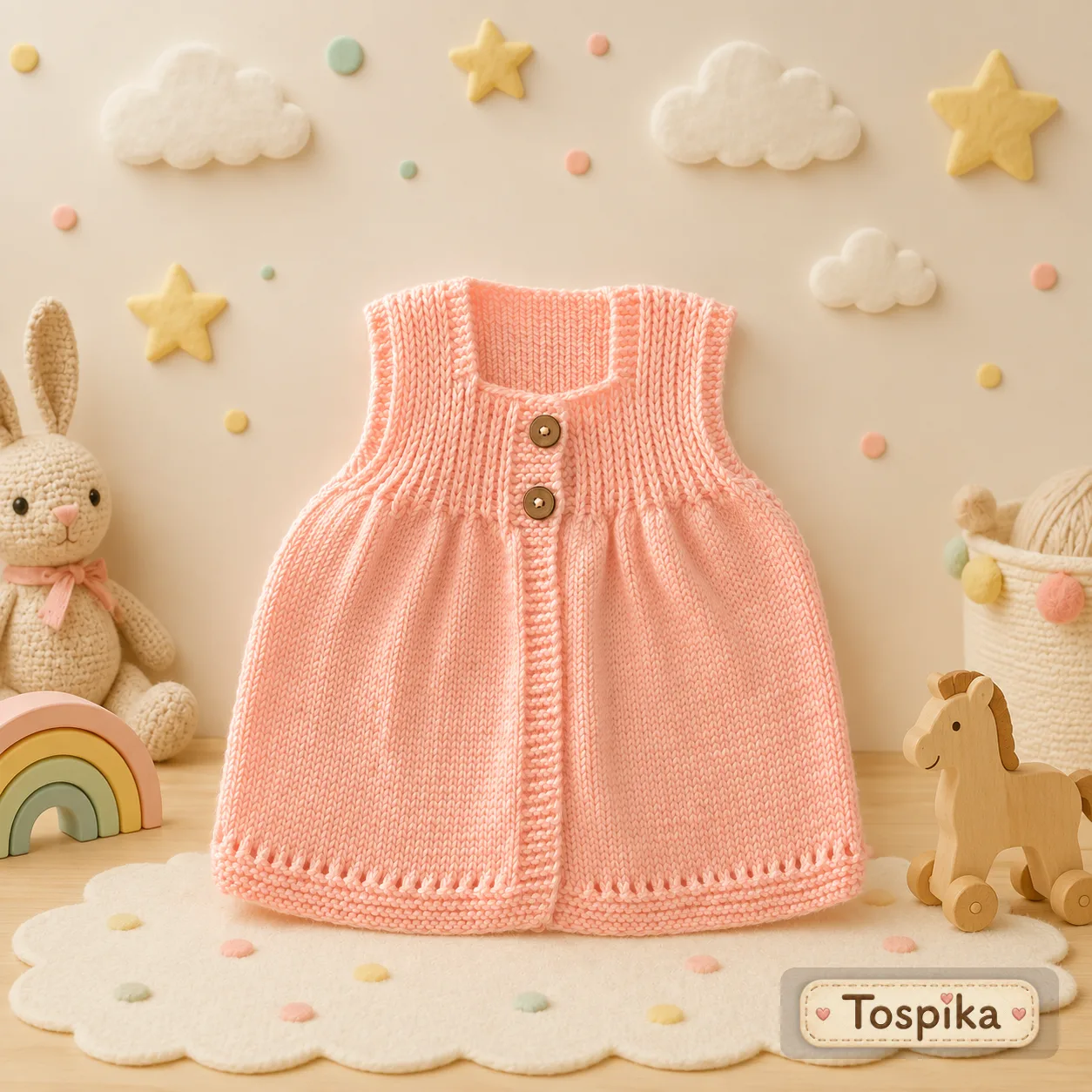
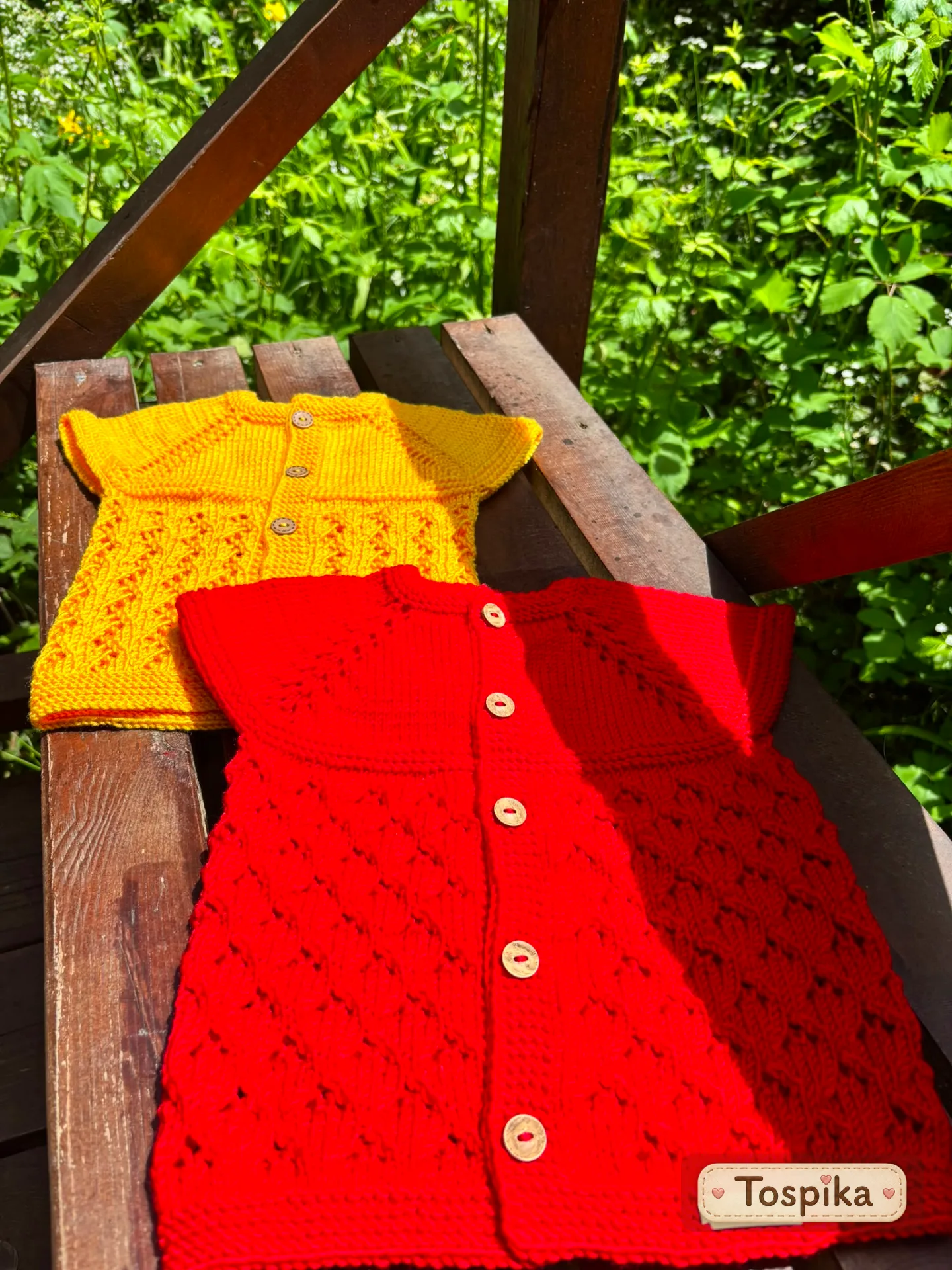
Crochet is often convenient for amigurumi, structured bags, motifs, edgings and freeform shapes. Knitting is often chosen for flowing sweaters, ribbed fabric, socks, hats and garments that benefit from elasticity.
A useful beginner test is to make two small swatches with the same yarn. Compare stretch, drape, edge stability, speed and comfort in your hands. The best first method is the one that supports the object you want to make and keeps you engaged.
Using both methods together
A knitted cardigan can have a crocheted border; crochet motifs can join a knitted body; ties, flowers and reinforced edges can be added with a hook. Check that both yarns share compatible care requirements and that the change in stretch will not distort the finished piece.
Combining methods is not a technical compromise. It is a design choice that lets each structure do the work it handles best.
Frequently asked questions
- Is crochet or knitting easier for beginners?
- Some beginners prefer crochet because only one loop is active; others enjoy the repeated rhythm of two needles. A small swatch in each method is the most reliable test.
- Does crochet use more yarn than knitting?
- Some dense crochet fabrics do, but yarn use depends on stitch pattern, gauge, tools and design. Use a pattern's yardage rather than a fixed percentage.
- Can you crochet a sweater?
- Yes. Choose yarn, stitches and gauge that provide the required drape, fit and stretch.
- Why is amigurumi usually crocheted?
- Compact single crochet creates a firm, shapeable fabric that helps contain stuffing.
- Can crochet and knitting be combined?
- Yes. Borders, motifs, bodies and details can use different methods when their stretch and care requirements are compatible.
Sources
- Standards and Guidelines for Crochet and Knitting — Craft Yarn Council craftyarncouncil.com
- Standard Yarn Weight System — Craft Yarn Council craftyarncouncil.com
- Top 10 Yarn Questions & Answers — Craft Yarn Council craftyarncouncil.com
Related content
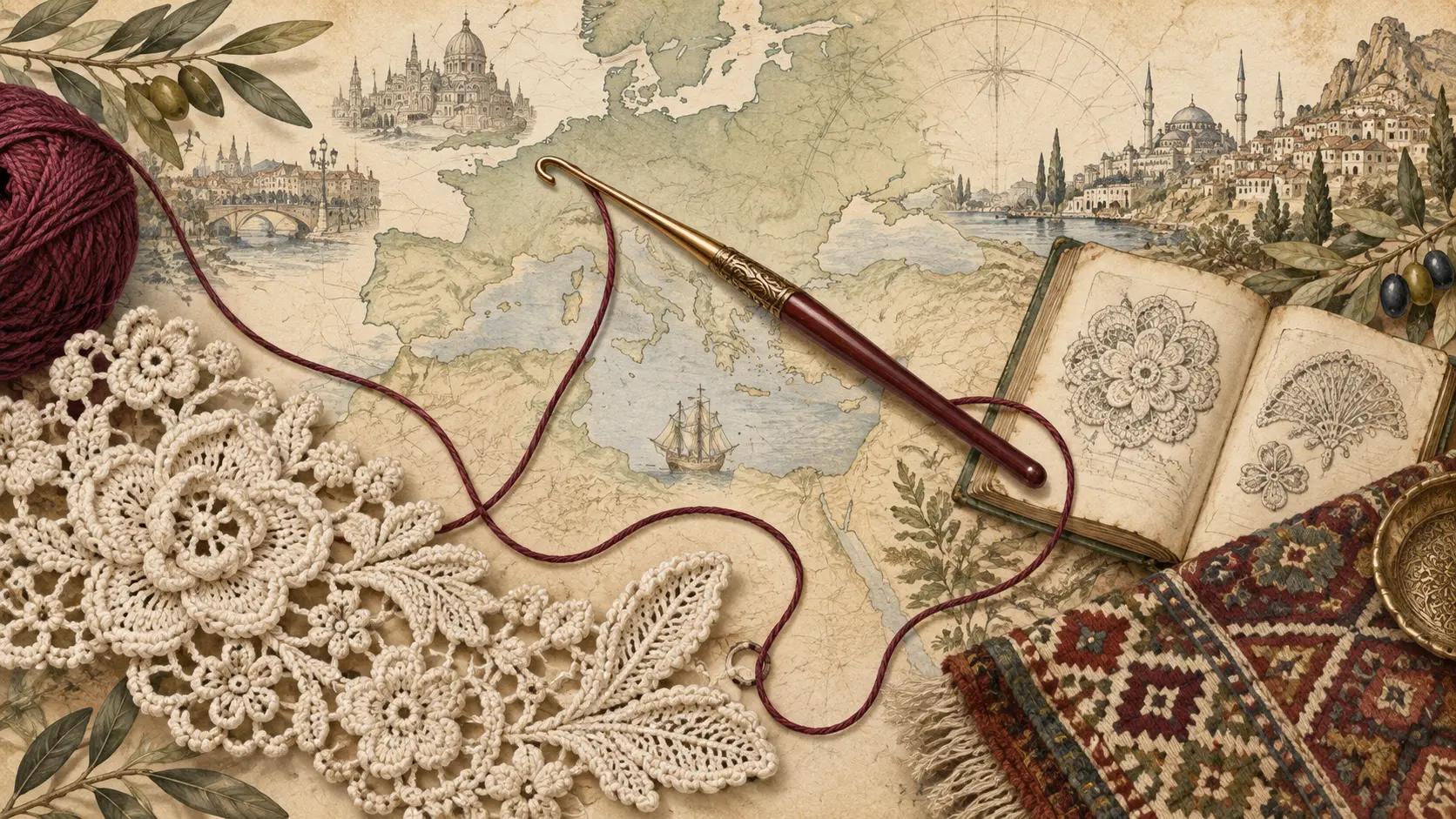
History of Crochet: Where, When and Who Invented It?
Crochet has no securely documented single inventor or birthplace. Its modern history becomes clearer through nineteenth-century pattern books, lace production and the movement of domestic craft knowledge.
Read more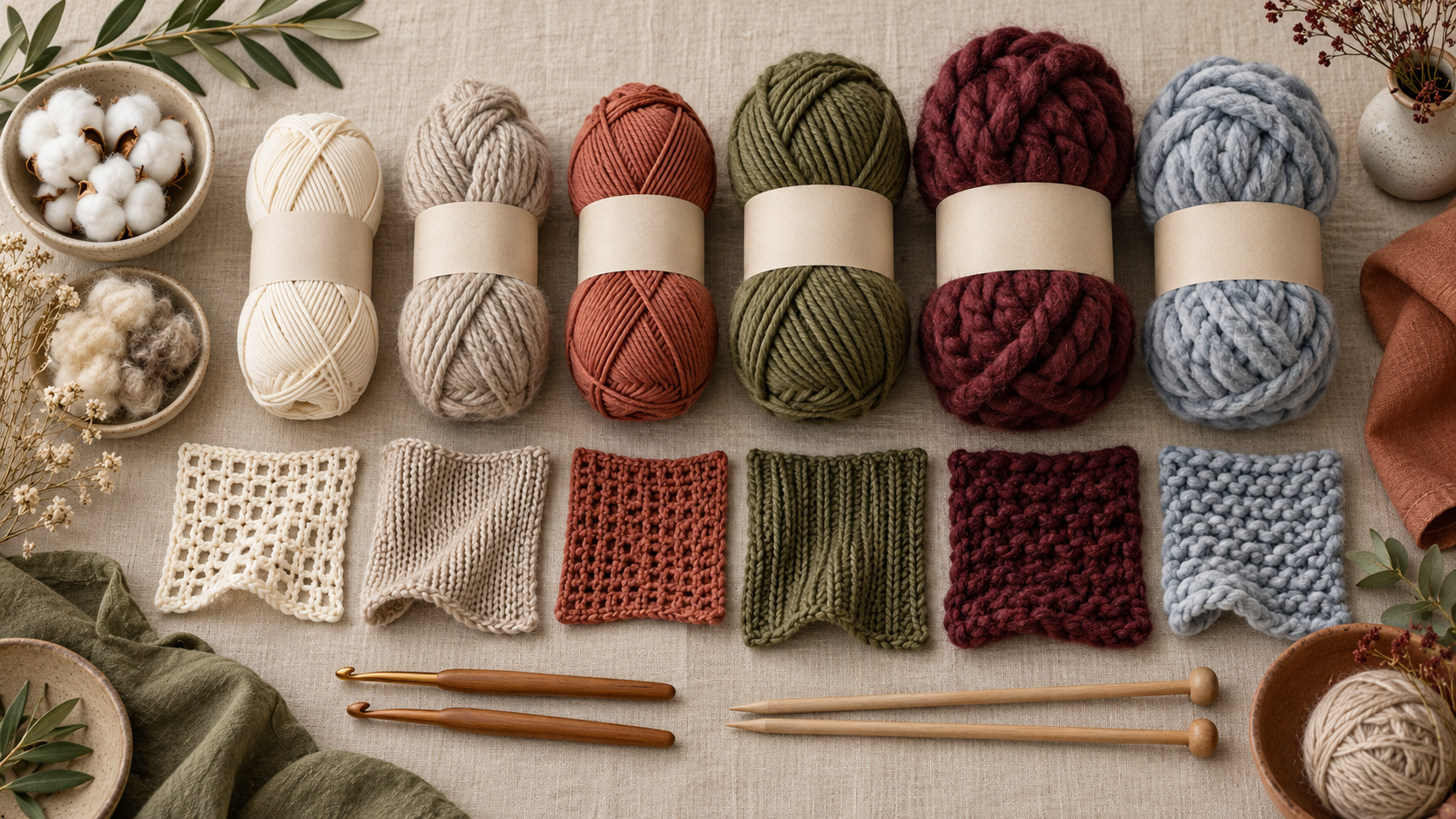
How to Choose the Right Yarn for Crochet and Knitting
Yarn choice is more than colour. Fibre, thickness, twist, yardage, care and gauge work together to determine how a handmade object looks and performs.
Read more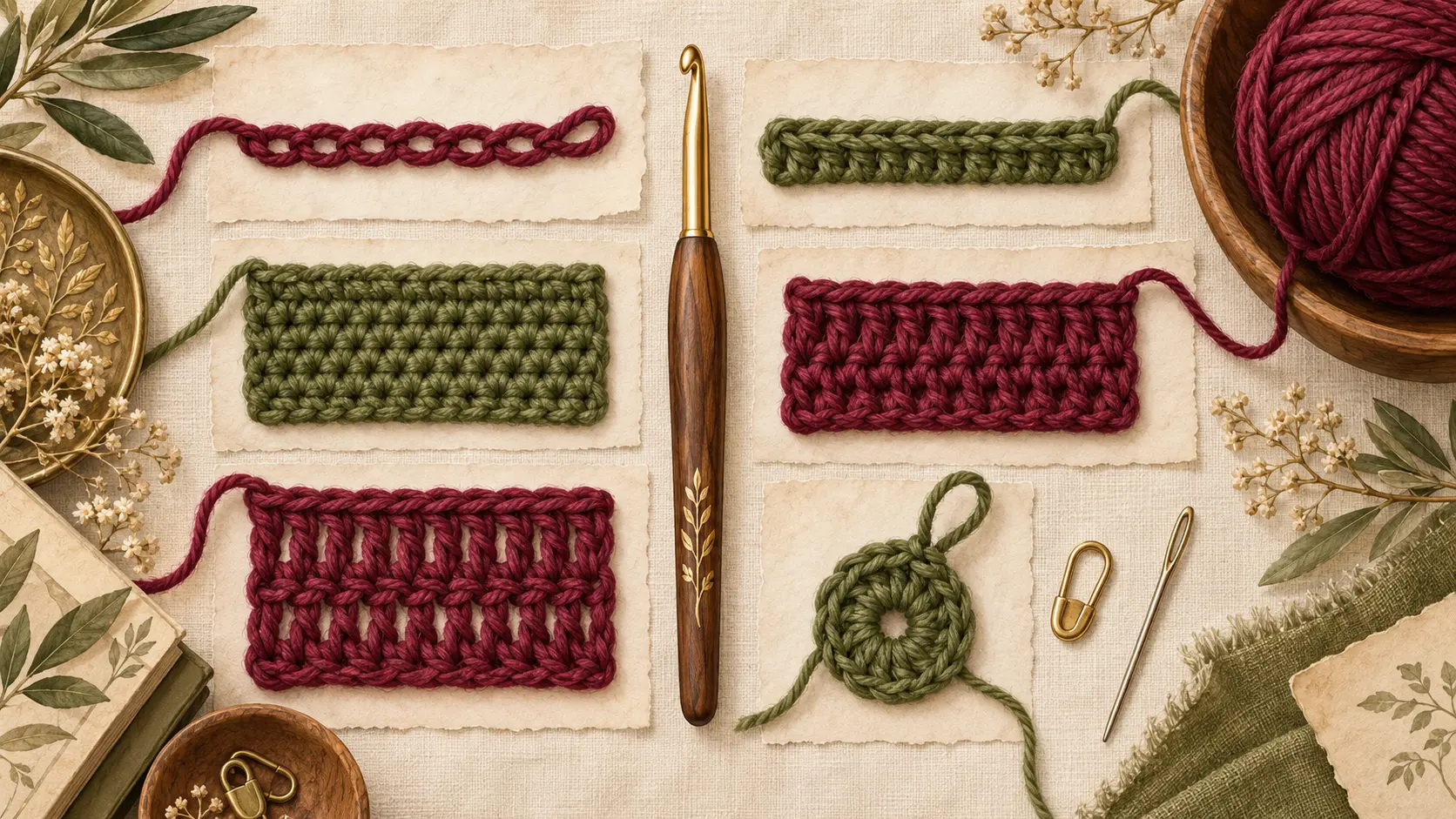
Beginner Crochet Glossary: Essential Stitches and Terms
Crochet patterns become easier to read once you know the core terms—and whether the designer is using US or UK terminology.
Read more