Beginner Crochet Glossary: Essential Stitches and Terms
Crochet patterns become easier to read once you know the core terms—and whether the designer is using US or UK terminology.
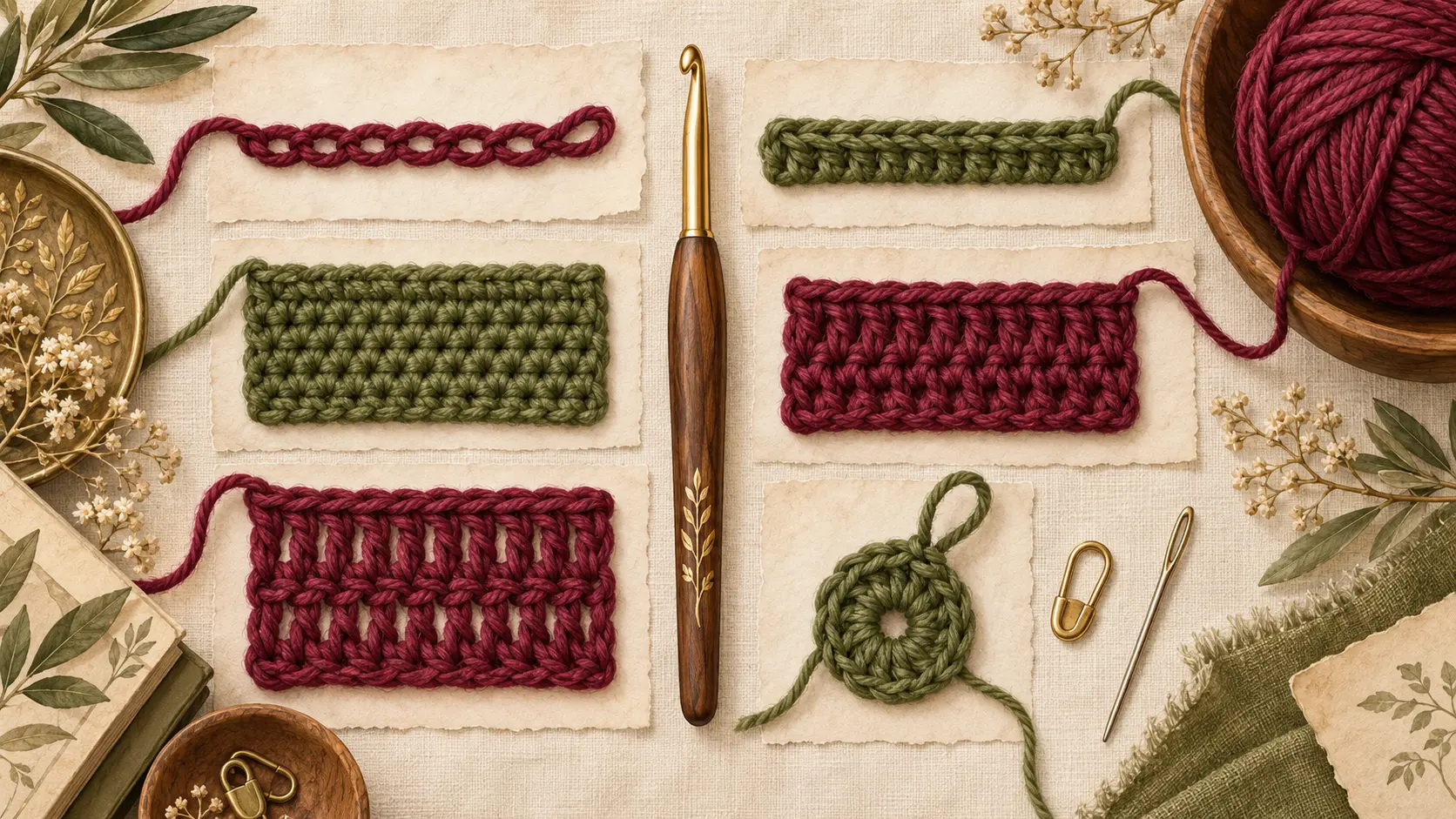
First check: US or UK terminology
Before reading an English-language pattern, identify its terminology system. US and UK patterns can use the same abbreviation for different stitches. US single crochet is called double crochet in UK terminology; US double crochet is called treble crochet in the UK.
Look for a terminology note, stitch key or gauge description. Do not infer the system from one abbreviation when a designer may also use custom terms.
Chain and slip stitch
A chain stitch, abbreviated ch, is made by drawing yarn through the active loop. Chains can form a foundation, create height or make spaces within a pattern.
A slip stitch, sl st in standard US abbreviations, draws a loop directly through the stitch and active loop. It joins rounds, moves the working position or creates a low-profile edge without adding much height.
Single, half double and double crochet
US single crochet, sc, is a short compact stitch widely used for amigurumi and firm fabric. In UK terminology the same stitch is called double crochet, dc.
US half double crochet, hdc, sits between single and double crochet in height. Its UK name is half treble, htr.
US double crochet, dc, is a taller stitch made with a yarn over before insertion. The equivalent UK term is treble crochet, tr. Always translate the stitch structure, not only the abbreviation.
Front loop, back loop and spaces
The top of a basic stitch usually shows two loops. FLO means work through the front loop only; BLO means work through the back loop only. Choosing one loop can create ridges, flexibility or a change in direction.
A space, sp, is an opening rather than the top of a stitch. Ch-sp means a chain space created in an earlier row or round. Patterns may ask you to work several stitches into the same space.
Increase, decrease and stitches together
An increase, inc, adds stitches, often by working more than one stitch into the same location. A decrease, dec, reduces the count by partially working stitches and completing them together.
Terms such as sc2tog or dc2tog mean work two corresponding stitches together. Count at the end of a row or round to catch shaping errors early.
Magic ring, round and turning chain
A magic ring, magic circle or adjustable ring starts circular work around a loop that can be tightened. It is common in amigurumi because it reduces the opening at the centre.
A round, rnd, is one circuit of circular work. A turning chain raises the yarn to begin a new row. Whether it counts as a stitch varies by pattern and must be checked in the instructions.
Gauge and swatch
Gauge is the number of stitches and rows or rounds in a stated measurement. UK patterns may call it tension. It controls finished size even when the correct yarn and hook are used.
Make, wash and dry the swatch as the finished object will be treated. If you have fewer stitches than required, your work is usually looser; if you have more, it is tighter. Change hook size and swatch again rather than forcing your hands to maintain unnatural tension.
Frequently asked questions
- What does sc mean in crochet?
- In US terminology, sc means single crochet. The same stitch is called double crochet, dc, in UK terminology.
- What does dc mean in crochet?
- In US terminology, dc is double crochet. In UK terminology, dc names the stitch called single crochet in the US.
- What do FLO and BLO mean?
- FLO means front loop only; BLO means back loop only.
- What is a magic ring?
- It is an adjustable loop used to begin circular crochet and tighten the centre opening.
- Why does crochet gauge matter?
- It determines the finished measurements, density, drape and often yarn use.
Sources
- Crochet Abbreviations Master List — Craft Yarn Council craftyarncouncil.com
- Crochet Chart Symbols — Craft Yarn Council craftyarncouncil.com
- Top 10 Yarn Questions & Answers — Craft Yarn Council craftyarncouncil.com
Related content
History of Crochet: Where, When and Who Invented It?
Crochet has no securely documented single inventor or birthplace. Its modern history becomes clearer through nineteenth-century pattern books, lace production and the movement of domestic craft knowledge.
Read more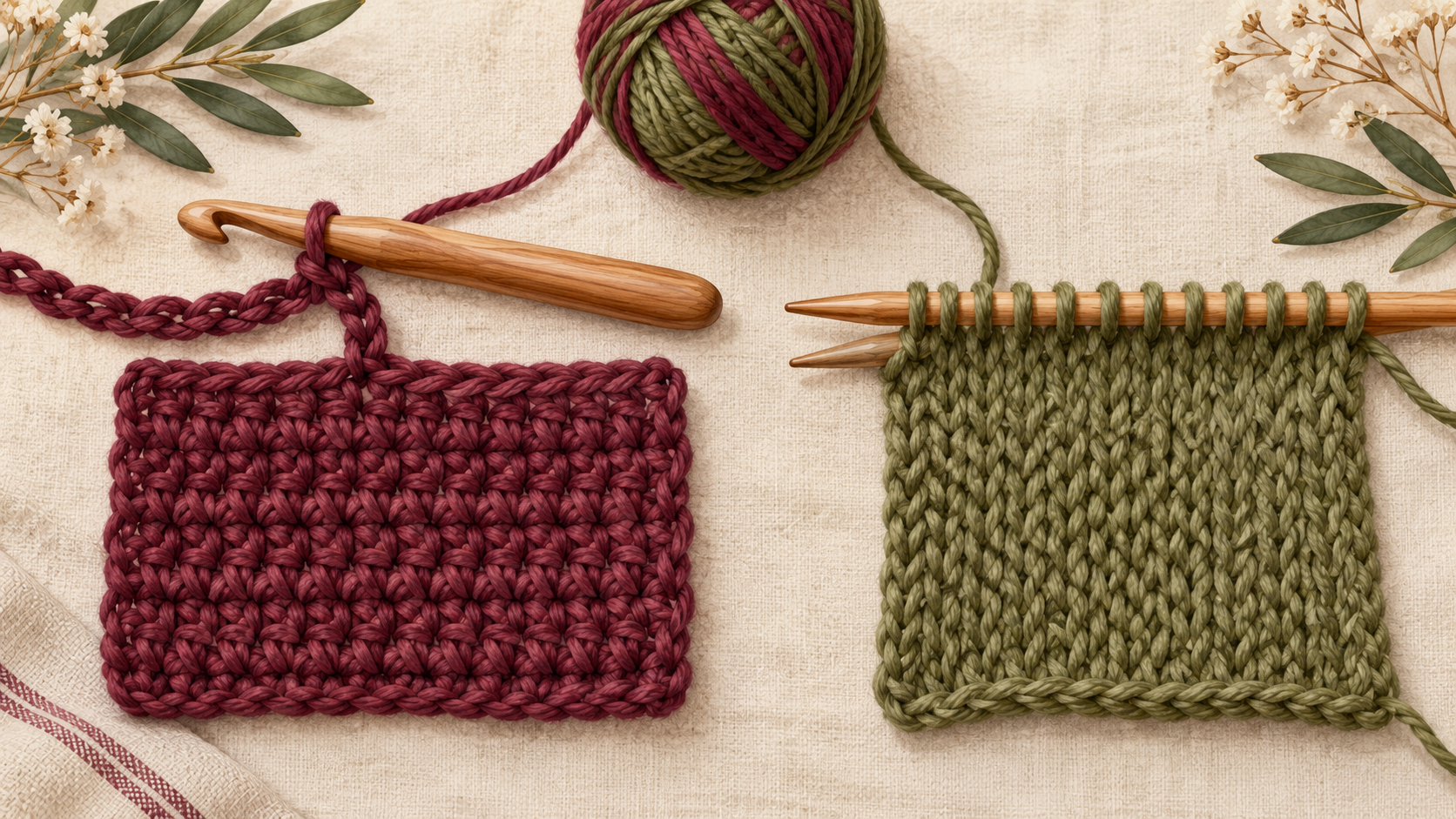
Crochet vs Knitting: What Is the Difference?
Crochet usually works one active loop with a hook; knitting holds many live loops across two needles. That structural difference changes the process, fabric and best uses.
Read more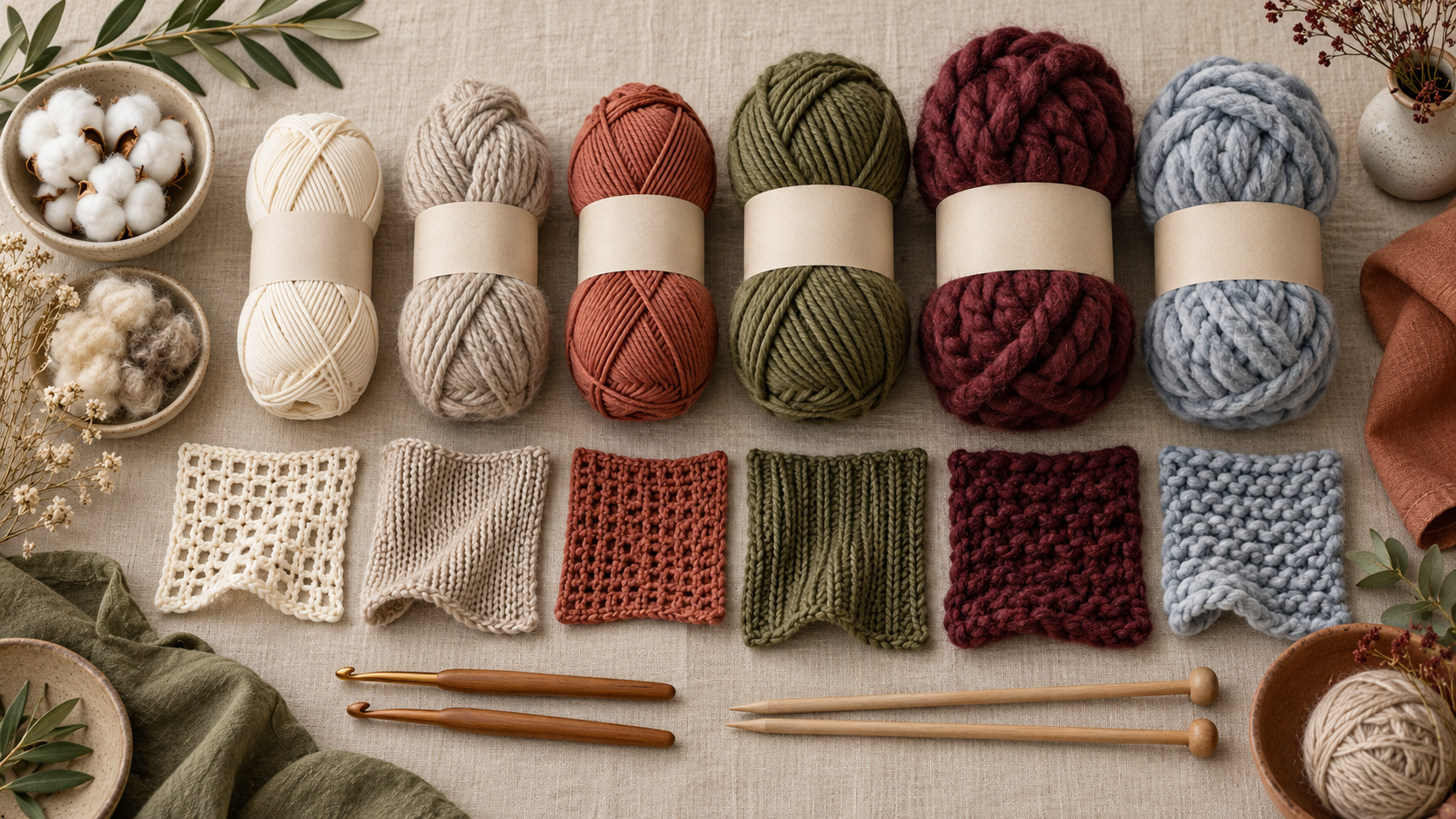
How to Choose the Right Yarn for Crochet and Knitting
Yarn choice is more than colour. Fibre, thickness, twist, yardage, care and gauge work together to determine how a handmade object looks and performs.
Read more