What Is Ceramics? An Introduction to Ceramic Art for Beginners
Ceramics is a time-honored art in which earth meets water, takes shape, and gains durability through controlled firing. Explore the essential concepts, production stages, and tips for beginners in this guide.
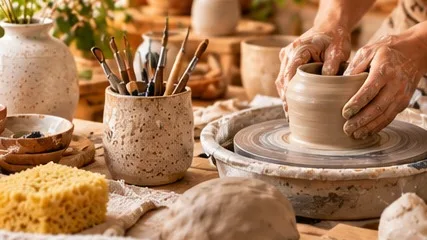
Ceramics is a time-honored art in which earth meets water, takes shape, gains durability through controlled firing, and becomes a unique work through creativity. Many objects, from cups and plates to vases and sculptures, can be created using ceramic techniques.
What is ceramics?
Ceramics encompasses both objects made by shaping clay and similar inorganic raw materials and firing them at specific temperatures, and the art of making them. During firing, the material undergoes physical and chemical changes that cause it to harden. The qualities of the finished piece depend on the clay, shaping method, and firing schedule used.
What is the difference between ceramics and pottery?
Pottery is a traditional craft that generally focuses on making functional objects such as vessels, bowls, and jugs. Ceramics is a broader field, encompassing everyday wares as well as decorative objects, sculptures, and experimental artworks.
The essential stages of ceramic production
The process generally consists of shaping, controlled drying, the first firing, surface decoration or glazing, and, when needed, a final firing. Every stage matters: uneven thickness, rapid drying, or an unsuitable firing schedule may cause cracking and deformation.
The Pottery Wheel emphasizes that even drying is just as important as slow drying; for example, if a handle dries faster than the body, the joint may crack. A piece must also be completely dry before it enters the kiln. According to Ceramics Monthly, water remaining in the clay turns to steam when heated and may crack or even cause the piece to explode.
The most common shaping techniques
Hand-building, coiling, slab building, and wheel throwing are among the most widely used methods. Hand-building offers an accessible starting point for small objects, while coil and slab techniques make it possible to construct different forms. On the wheel, clay is centered and shaped on a rotating surface. For details on each method, explore our guide to ceramic shaping techniques.
What do ceramic glazes do?
During firing, glazes can create a glass-like layer on the surface, adding color, gloss, matte effects, and texture. Not every glaze is suitable for contact with food. For pieces intended for food or drink, it is essential to verify that the glaze is appropriate for its intended use and has been fired correctly. As Digitalfire emphasizes, you cannot tell whether a glaze is food-safe simply by looking at it.
Can you make ceramics at home?
You can shape clay at home, but real ceramic clay generally requires a suitable kiln to harden. A shared studio can be a good starting point, offering access to a kiln and technical knowledge. Air-dry clay and polymer clay are different materials and do not share the same qualities as true ceramics. Discover what you need to begin in our guide to ceramic materials.
Tips for beginners
Choose a small, simple form for your first project. Learn about the type of clay you are using, join the pieces correctly, let your work dry slowly, and follow the firing instructions. At first, the aim is not to create a flawless piece, but to understand the material and develop careful working habits.
When buying handmade ceramics, it is good practice to ask the maker which clay was used, whether the glaze is food-safe, and how the piece should be cared for. On Tospika, you can contact makers directly; Tospika is not involved in the sales or payment process and does not charge commission.
Frequently asked questions
- Do you need a wheel to make ceramics?
- No. Many pieces can be made without a wheel using pinching, coil and slab techniques.
- Can ceramics be fired in a home oven?
- Usually not. Ceramic clay needs to be fired in a kiln at the high temperature the material requires.
- Is air-dry clay the same as ceramic?
- No. Air-dry clay is mostly a hobby material that needs no kiln; real ceramic clay differs in strength and in how it is made.
- What is bisque firing?
- It is the first firing of dried work. It hardens the clay so it no longer dissolves in water and prepares it for glazing.
- Can any glaze be used on tableware?
- No. Food safety cannot be judged by appearance; the glaze and firing must be confirmed as suitable for food contact.
Sources
- 3 Stages of Firing Clay – A Beginner Guide to Firing Pottery — The Pottery Wheel (2021-01-24) thepotterywheel.com · Accessed: 2026-10-19
- Bisque Firing 101 — Ceramics Monthly (Dave Finkelnburg) (2017-02) ceramicartsnetwork.org · Accessed: 2026-10-19
- Food Safe — Digitalfire (Tony Hansen) digitalfire.com · Accessed: 2026-10-19
Related content
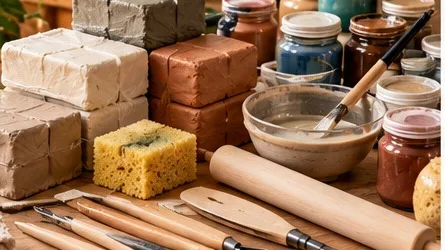
Ceramic Materials for Beginners: What Do You Need?
You do not need every tool when starting ceramics. Choose your technique and essential materials first to protect your budget and make learning easier.
Read more
Ceramic Shaping Techniques: Hand-Building, Coiling, Slabs, and Wheel Throwing
The same clay can become entirely different pieces through different shaping methods. Explore hand-building, coiling, slab building, and wheel throwing, and learn when to choose each one.
Read more