
Ceramic Shaping Techniques: Hand-Building, Coiling, Slabs, and Wheel Throwing
The same clay can become entirely different pieces through different shaping methods. Explore hand-building, coiling, slab building, and wheel throwing, and learn when to choose each one.
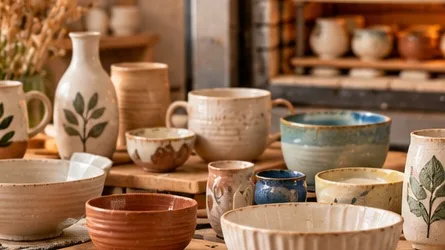
In ceramics, the same clay can become entirely different pieces through different shaping methods. The right technique depends on the form you want to create, your experience, and the tools available to you.
1. Hand-building technique
In hand-building, clay is shaped directly using the fingers and simple tools. It is well suited to small bowls, jewellery, figures, and decorative objects. For a first project, you might choose a small pinch pot and try to keep the walls as even as possible. The Pottery Wheel recommends pressing your thumb into the centre of an orange-sized ball of clay, then rotating and pinching it to form the walls.
2. Coiling technique
In the coiling technique, clay is rolled into long coils of a similar thickness. The coils are added around the base layer by layer, and the joins are carefully blended. This method is useful for vases, plant pots, and sculptural forms. It is important to avoid gaps between the layers and to monitor the wall thickness. According to the same source, the coils should be blended on the inside before the form grows taller; otherwise, the interior becomes difficult to reach.
3. Slab-building technique
In slab building, clay is rolled into a flat sheet using a rolling pin or slab roller. Pieces are cut and joined to create plates, boxes, tiles, and geometric objects. Keeping the slabs evenly thick, joining the edges properly, and supporting the piece as it dries can help reduce warping. Placing strips of equal thickness on either side of the rolling pin makes it easier to roll the slab to a consistent thickness throughout.
4. Pottery wheel
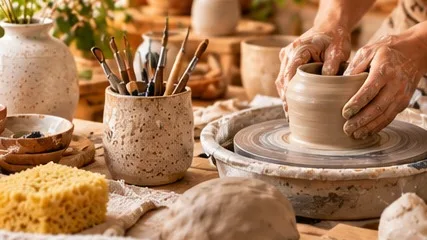
On the wheel, clay is placed on the rotating wheel head and centred. It is then opened, pulled upwards, and shaped into the desired form. This is a common method for symmetrical bowls, cups, and vases. Centring can feel difficult at first; short practice sessions and guidance from an experienced instructor can be helpful. Seattle Pottery Supply recommends that beginners start with a more forgiving clay, such as stoneware, rather than porcelain.
Which technique should you choose?
Hand-building can be preferred for small, free-form pieces; coiling for layered, tall forms; slab building for flat-sided and angular forms; and the wheel for symmetrical vessels. No technique is superior to another; the project and your personal way of working are what matter.
Tips for joining and smoothing surfaces
Before joining pieces, score the surfaces appropriately and use slip made from the same clay. Press and blend the joins together. Avoid adding too much water when smoothing the surface, and aim for a similar thickness throughout the piece. As Potclays notes, delicate clays such as porcelain are less forgiving of variations in thickness and uneven drying.
Three small projects for beginners
For your first project, you could try a hand-built bowl, followed by a small coiled plant pot, and then a jewellery dish made with the slab-building technique. If you are interested in wheel throwing, practise basic centring in a workshop. Finish your pieces according to the clay manufacturer's and workshop's drying and firing guidelines.
You can find the tools you need in our ceramics materials guide. When buying handmade ceramics, you can ask the maker which technique was used; Tospika is not involved in the sales or payment process and does not charge commission.
Frequently asked questions
- Which shaping technique should I start with?
- Pinching is usually the easiest start; you can make small forms with simple tools.
- Why do coil-built pieces crack?
- Poorly joined coils, changes in wall thickness or fast, uneven drying can all contribute to cracking.
- Is throwing on the wheel difficult?
- Centring and pulling walls take skill. Regular short practice and support from a teacher make it easier to learn.
- Why do slab pieces warp?
- Uneven slab thickness and uneven drying can cause warping. Rolling to an even thickness and supporting the piece while it dries reduce the risk.
- What is used to join pieces of clay?
- The surfaces are scored and joined with slip, usually made from the same clay, then pressed together and blended.
Sources
- Hand Building Pottery – 4 Easy Techniques — The Pottery Wheel (2022-08-30) thepotterywheel.com · Accessed: 2026-10-19
- How to Center: Throwing on a pottery wheel part 2 — Seattle Pottery Supply seattlepotterysupply.com · Accessed: 2026-10-19
- How to Choose the Right Clay Body for Your Project — Potclays (2025-10-30) potclays.co.uk · Accessed: 2026-10-19
Related content
What Is Ceramics? An Introduction to Ceramic Art for Beginners
Ceramics is a time-honored art in which earth meets water, takes shape, and gains durability through controlled firing. Explore the essential concepts, production stages, and tips for beginners in this guide.
Read more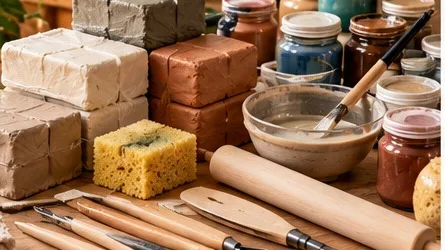
Ceramic Materials for Beginners: What Do You Need?
You do not need every tool when starting ceramics. Choose your technique and essential materials first to protect your budget and make learning easier.
Read more