
Cold Process vs Hot Process Soap: What Is the Difference?
Cold and hot process share the same chemistry. They differ in temperature, where saponification finishes and how the soap looks, and curing matters for both.
What the two methods have in common
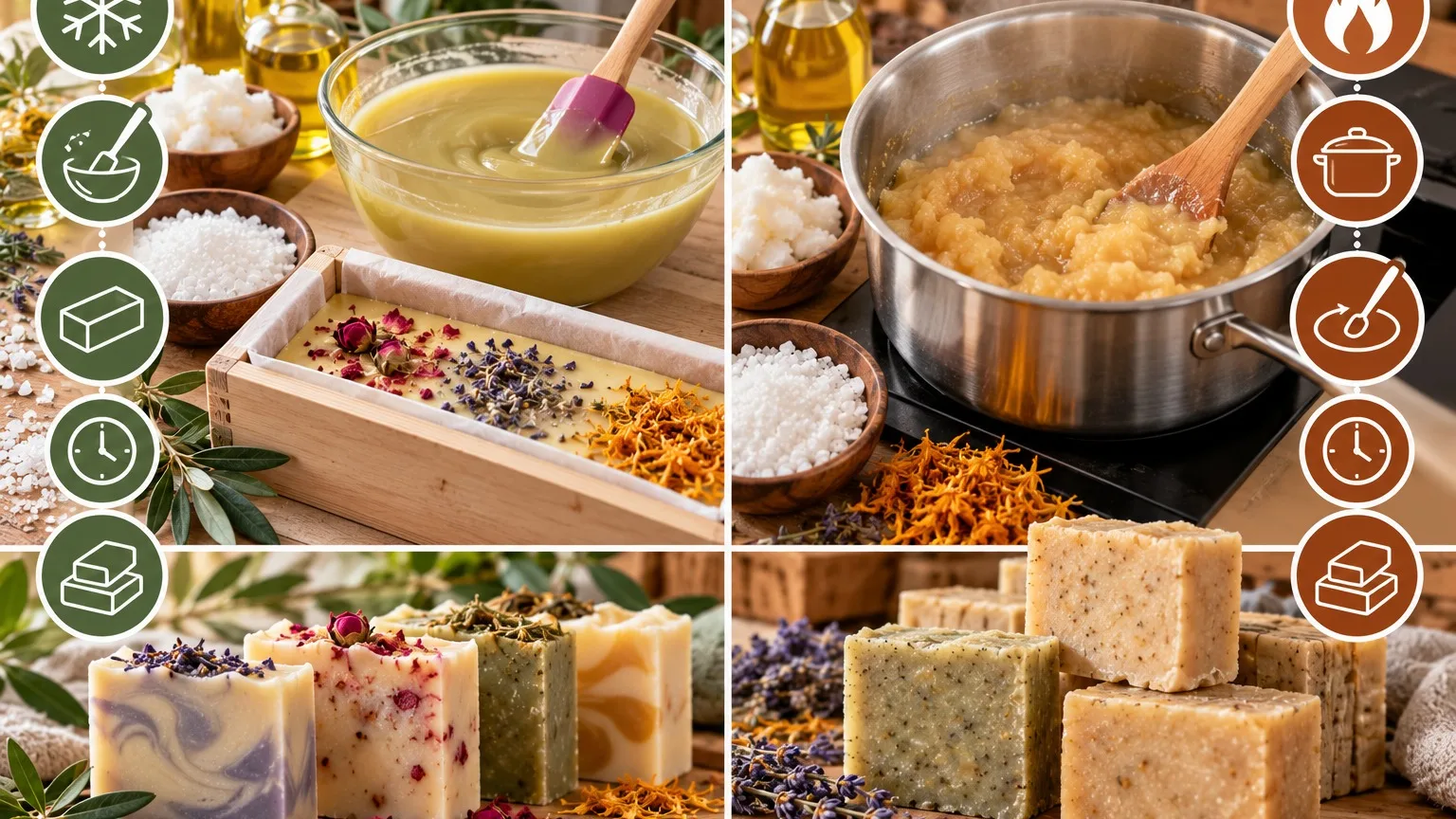
Cold process and hot process are the two most common ways to make handmade bar soap from scratch. In both, plant or animal fats react with a strong alkali known as lye. This reaction is called saponification, and it produces soap and glycerin. According to the School of Natural Skincare, both methods rely on the same basic chemistry; the main differences are temperature and where saponification is completed.
Melt and pour, where a ready-made soap base is melted and poured into moulds, is a separate technique and not covered here.
How cold process works
In cold process, oils and lye solution are mixed at relatively low temperatures, usually around 30–50 °C according to the same source. Once the batter thickens it is poured into a mould, where most of the saponification takes place. The soap is typically unmoulded and cut after two or three days.
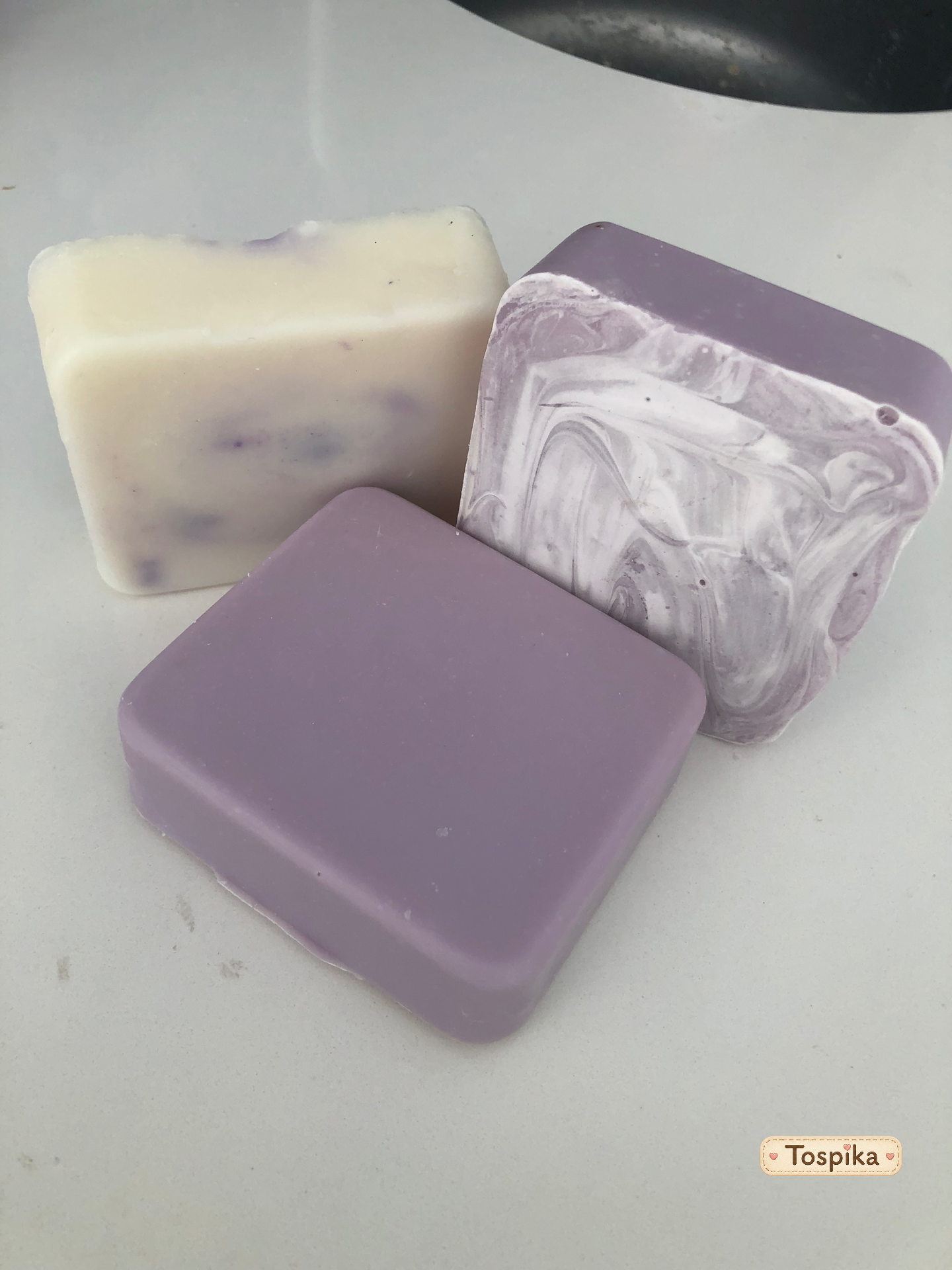
Because the batter stays fluid for longer, layers and swirls are easier to create. Bars usually have a smooth surface and a lighter colour. A whitish film called soda ash can form on the surface of cold process soap.
How hot process works
In hot process, the mixture is cooked, usually at 50–100 °C and often in a slow cooker. Saponification completes during cooking, and the batter turns thick, gel-like and translucent before being pressed into the mould.
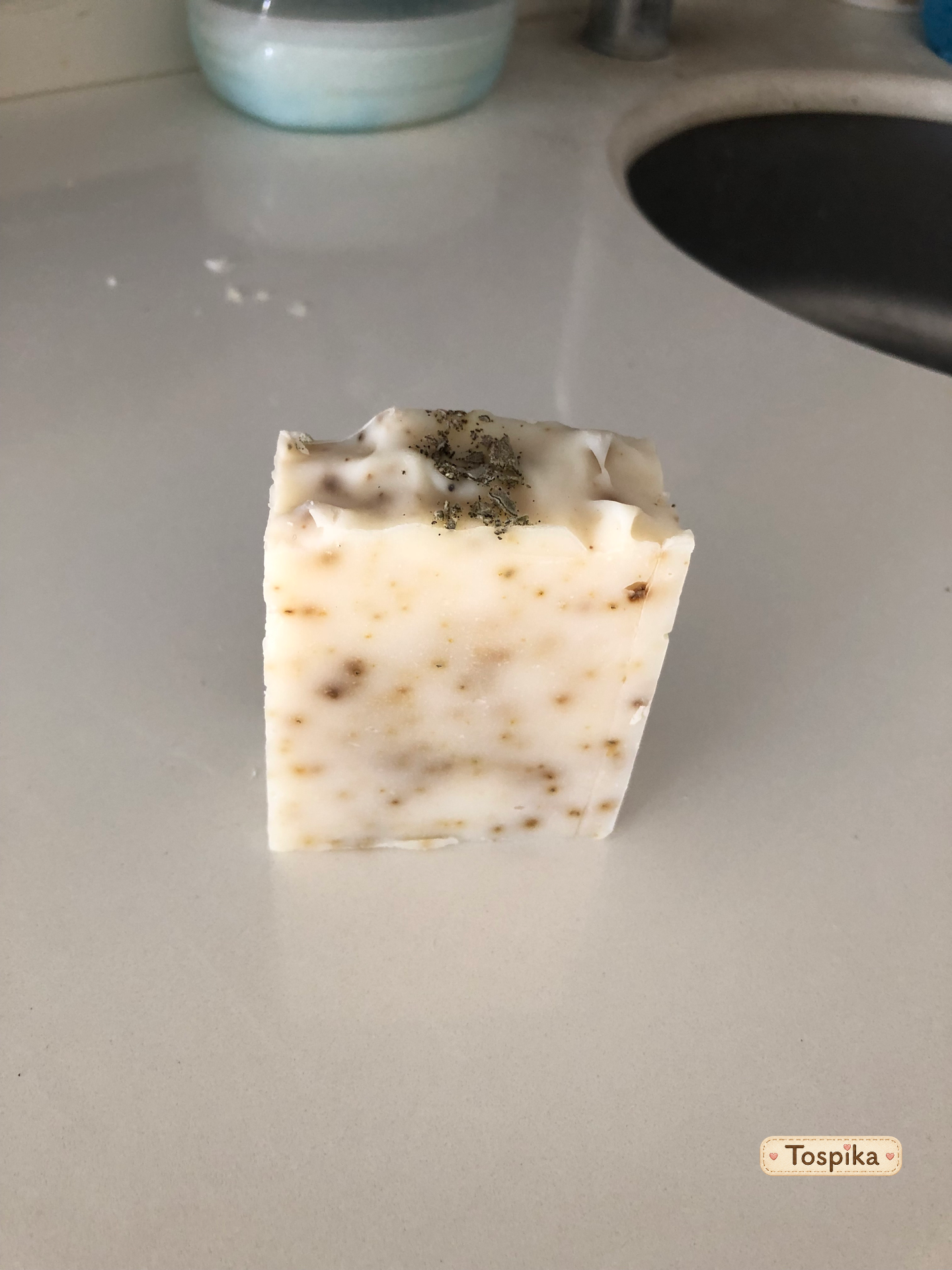
The thick texture makes detailed swirls difficult, so bars tend to look more rustic and textured, often slightly darker. The School of Natural Skincare notes that extra oil (superfat) can be added after the cook, giving more control over which oil stays unsaponified. The same source recommends that beginners start with cold process, as hot process requires more experience.
Saponification and cure are not the same
This is the most common point of confusion. Saponification is the chemical reaction that turns fat into soap. Curing is the period of several weeks in which cut bars rest in an airy place, losing excess water, hardening and becoming more balanced to use.
Sources generally recommend a cure of four to six weeks for cold process soap. Hot process soap is fully saponified before it goes into the mould, so it can be used once cut, yet both the School of Natural Skincare and Bramble Berry say a few weeks of cure still benefits it. Experienced makers on the Soapmaking Forum add that hot process sometimes needs a longer cure, because it is made with more water. In short, the idea that hot process soap needs no cure is incomplete.
Which is better?
Neither method is clearly superior. Cold process offers more freedom in design and appearance; hot process offers control over the superfat and a shorter wait. How a soap feels on the skin, how long a bar lasts and how it lathers depend more on the recipe, the oils used, the superfat level and the cure time than on the method.
Questions to ask when buying handmade soap
When choosing a handmade soap, you can ask the maker which method they used, which oils it contains and how long it was cured. An experienced maker will answer these questions easily. Browse bar soaps by women makers on Tospika and contact each maker directly with your questions. Tospika is not involved in sales or payments and takes no commission.
Safety note
This article is not a recipe. Lye is corrosive; anyone starting to make soap should wear gloves, eye protection and long sleeves and follow a reliable course or guide.
Frequently asked questions
- Why is cold process soap left to cure for weeks?
- During the cure, excess water evaporates and the bar hardens. Sources generally recommend four to six weeks for cold process soap.
- Can hot process soap be used right away?
- Saponification finishes during the cook, so it can be used once cut. Sources still say a few weeks of cure makes the bar harder and more balanced.
- Which method is better for skin?
- That depends more on the recipe, the oils, the superfat level and the cure time than on the method. Asking the maker about ingredients and cure is more useful.
- What is the white film on some soap bars?
- It is called soda ash and can appear on cold process soap. According to the School of Natural Skincare, it does not form on hot process soap.
- Is melt and pour soap different from these methods?
- Yes. Melt and pour uses a ready-made soap base that is melted and moulded; the reaction between oils and lye does not take place during making.
Sources
- Cold process vs hot process soap: A quick guide — School of Natural Skincare (2022-12-15) schoolofnaturalskincare.com · Accessed: 2026-10-19
- Hot Process Soap vs Cold Process Soap — Bramble Berry brambleberry.com · Accessed: 2026-10-19
- Semi-Boiled soap process: Curing duration — Soapmaking Forum soapmakingforum.com · Accessed: 2026-10-19
Related content
The History of Soap: From Ash, Fat and Water to a Living Craft
Explore the history of soap from early Mesopotamian records and Aleppo workshops to Ottoman bath culture, industrial chemistry and today’s handmade bars.
Read more