What Is a Tufted Rug? Discover the Handmade Technique
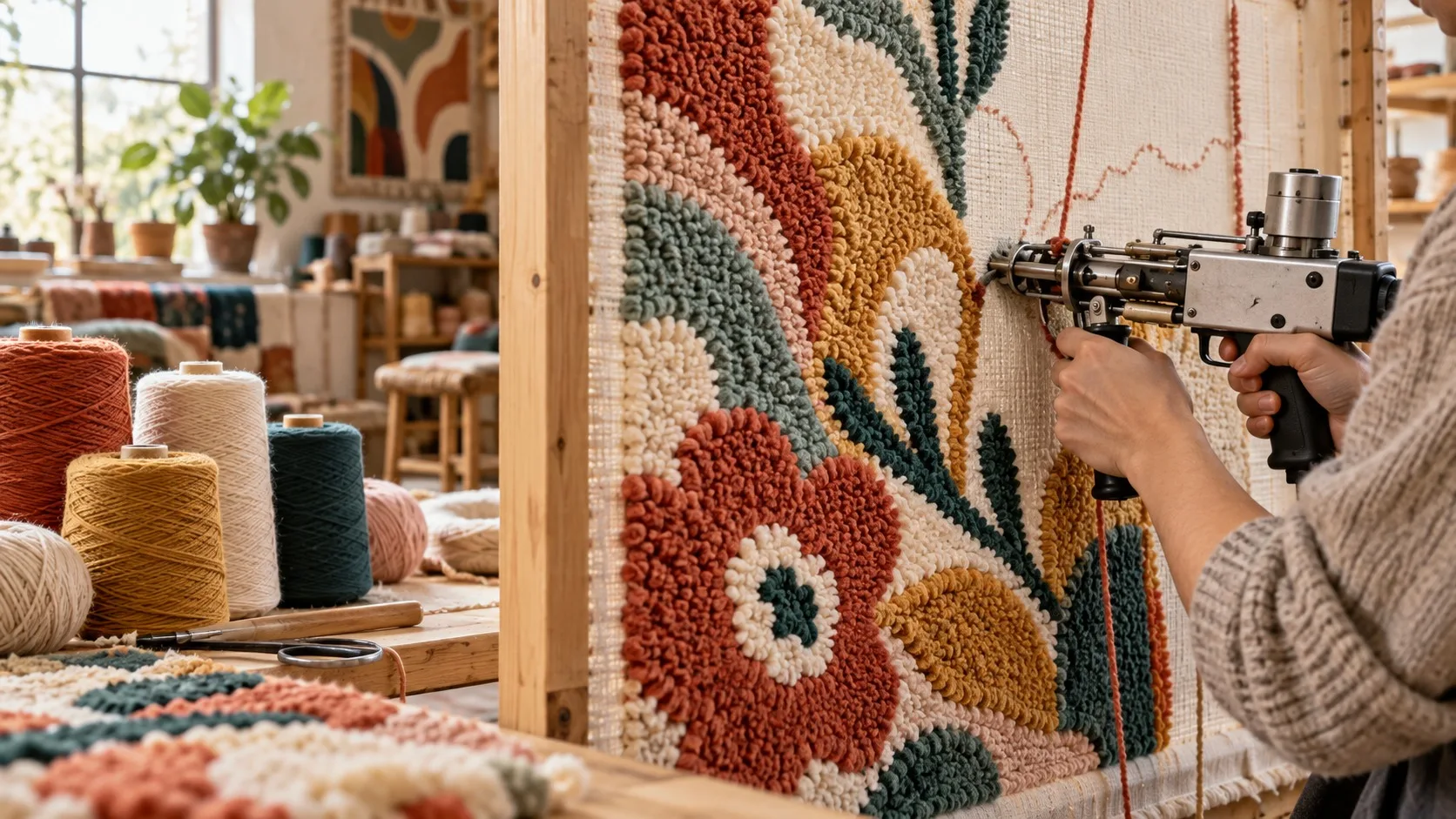
A drawing can become a richly textured rug made with colorful yarns. A tufted rug is created by pushing yarn through a taut fabric foundation using a special needle or tufting gun. Depending on the technique, the finished surface may be soft with cut ends or formed with loops. This method offers makers a broad creative space for combining different colors and original shapes.
We are delighted to see the handmade tufting work of our new maker at Tospika. So, how are these rugs made, and what stages lie behind each design?
What is the tufting technique?
Tufting is the process of passing yarn through a primary backing fabric to create pile or loops on the surface. In handmade production, the fabric is stretched over a sturdy frame, and the maker works the design with yarn from the back of the fabric. Once the piece is complete, the yarns are secured from behind and a backing suitable for the product's intended use is added.
This technique differs from traditional hand-knotted rug making. A tufted rug also reflects the maker's work in drawing, color selection, tufting, and finishing; each method has its own distinctive appearance and structure.
How is a tufted rug made?
1. The design and colors are planned
The maker first determines the rug's size, shape, and pattern. The relationship between colors, the thickness of the lines, and where the rug will be used are all considered during the design stage. If the design includes lettering or a directional motif, special attention is paid to its orientation because the work is done from the back of the fabric.
2. The foundation fabric is stretched over a frame
A fabric suitable for tufting is stretched over the frame so that it will not loosen while the maker works. A taut surface helps the yarn move more evenly and allows the edges of the design to be worked with greater control.
3. The yarns are worked into the fabric
The tufting gun pushes the yarn through the fabric. The maker fills in areas of color and lines step by step. Depending on the equipment and settings used, two main finishes can be created on the front:
- Cut pile: The yarn ends are cut, creating a soft, plush, and fluffy surface.
- Loop pile: The yarn loops remain intact, giving the surface a more defined looped texture.
Some designs combine both finishes to create contrasting textures.
4. The back is secured
Once the design is complete, a suitable adhesive is applied to the back to keep the yarns in place. Depending on the materials used and the product's purpose, a protective backing fabric may then be added. The materials and application used at this stage may vary from maker to maker.
5. The edges and surface are finished
The rug is removed from the frame, its edges are tidied, and, if needed, the surface yarns are trimmed to define the lines of the design. These final touches influence the piece's appearance and the quality of its finish.
Where can tufted rugs be used?
Depending on their size, yarn, and backing, tufted pieces can be used as decorative floor rugs, small mats, wall hangings, or colorful focal points in a room. Not every tufted piece is suitable for the same level of use. If it will be placed in an entryway, kitchen, or other high-traffic area, it is a good idea to ask the maker about the yarn type, backing, and care recommendations.
What should you look for when choosing a handmade tufted rug?
- Dimensions: Check the product's width and length, as well as the pile height if provided.
- Materials: Find out the yarn composition and backing material.
- Intended use: A piece made as wall décor may have different requirements from a rug intended for the floor.
- Care: Ask the maker directly for cleaning instructions; the adhesive and yarn type may affect the appropriate care method.
- Design: If color and size customization are available, confirm the details with the maker before ordering.
Discover tufted designs at Tospika
Every stage of a tufted rug reflects the maker's choices and craftsmanship: the original drawing, the arrangement of colors, the tufted yarns, and the finished edges. To explore the work of our new maker, lorientuft, and learn about product dimensions and materials, visit the lorientuft maker profile. You can contact the maker about a design you love through the Tufted Flower Rug product page or the Punch Needle Rugs and Kilims category.
Frequently asked questions
Are tufted rugs handmade?
In designs made with a handheld tufting gun, the maker carries out the drawing, color tufting, and finishing stages. The tufting method can also be used in industrial rug production, so not every tufted rug is automatically considered handmade. Ask the seller how the product was made.
What is the difference between tufting and traditional hand-knotting?
In tufting, yarns are passed through a foundation fabric and secured at the back. In traditional hand-knotted rugs, the yarns are individually tied onto the warp. These are different production techniques.
Can a tufted rug be washed?
There is no single care rule that applies to every tufted rug. Yarn, adhesive, and backing materials may vary. Before washing or treating stains, follow the care instructions provided by the maker.