The Art of Kırkyama (Turkish Patchwork): History, Techniques and a Beginner's Guide
What is kırkyama?
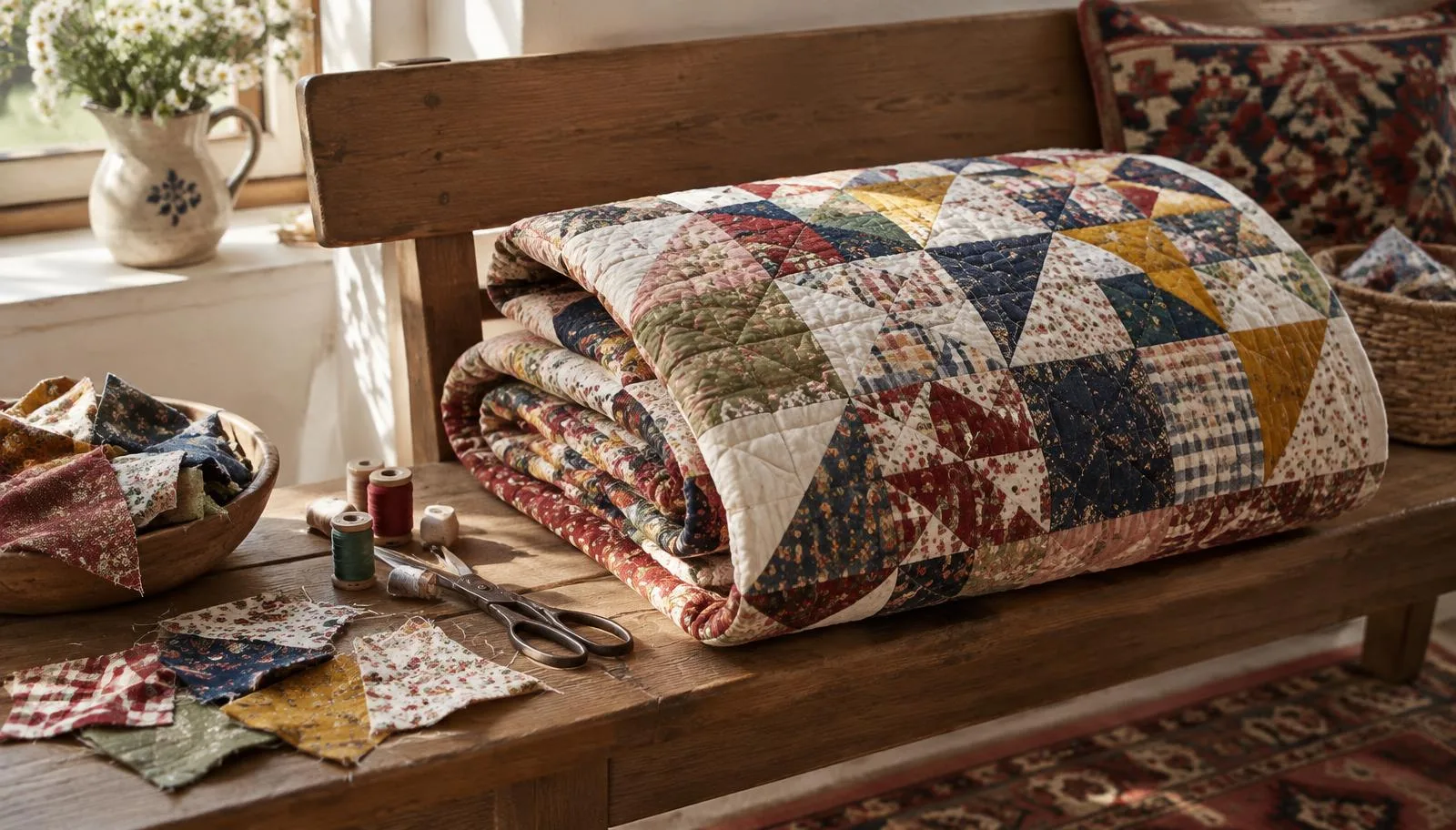
Kırkyama is a traditional craft in which fabric pieces in different colours and patterns are sewn together to create a new, unified surface. Internationally it is known as patchwork. The Turkish name literally means "forty patches" and describes a whole born from countless small pieces.
Once the most practical way to use up leftover fabric, kırkyama has become a symbol of sustainable making and personal design. You will find it in quilts and bags, wall hangings and cushion covers.
In this guide you will learn about the history of kırkyama, its basic techniques, the materials you need and how to make your first project step by step.
The history of kırkyama: from Anatolia to the world
The idea of joining fabric scraps appeared naturally in every culture where cloth was precious and hard to come by. Traces of patching and piecing can be found even in garments and covers from antiquity.
In Anatolia, kırkyama lived on especially as part of trousseau (çeyiz) traditions. Quilts, bundle wraps and cushion covers sewn by mothers and grandmothers from leftover fabric carried both thrift and family memory. In some regions a quilt was sewn for a newborn from fabrics collected from forty different homes, as a wish for abundance and good health.
In Europe and America, patchwork and quilting spread widely in the 18th and 19th centuries. Community quilting gatherings turned the craft into a social occasion.
Today kırkyama is popular again thanks to growing interest in upcycling, slow fashion and handmade goods. Contemporary designers reinterpret traditional motifs with minimal colour palettes and geometric layouts.
Basic patchwork techniques
There are four basic techniques to know when you start. Each offers a different look and level of difficulty.
- Squares and rectangles (easy): Equal-sized pieces are sewn into rows, then the rows are joined. Ideal for cushion covers and baby blankets.
- Triangles / half-square triangles (intermediate): Two triangles form a square block, creating star and arrow patterns. Common in quilts and wall hangings.
- Log cabin (intermediate): Strips are added one by one around a central square. Well suited to table cloths and quilts.
- Appliqué (intermediate to advanced): Cut-out shapes are stitched onto a base fabric by hand or machine. Striking on bags and decorative panels.
There is also a free style called crazy patchwork, where irregular pieces are joined and the seams are decorated with embroidery.
Materials you need
You do not need expensive equipment to begin; a basic kit is enough.
- Fabric: 100% cotton is the easiest to work with. Choose fabrics that do not shrink or stretch.
- Rotary cutter: Cuts pieces quickly and straight. At first, a sharp pair of fabric scissors will do.
- Cutting mat: Protects your table; its grid makes measuring easier.
- Clear patchwork ruler: Essential for an accurate seam allowance.
- Sewing machine or needle and thread: Small projects can also be sewn by hand.
- Pins and fabric clips: Stop pieces from slipping.
- Iron: Pressing the seam allowances after every seam is the secret to a neat result.
- Batting and backing: Needed for quilts and quilted pieces.
Your first project step by step: a 40x40 cm cushion cover
The ideal beginner project is a cushion cover made of 16 squares. You can finish it in a weekend.
- Choose your fabrics: Pick 4–6 coordinating fabrics. A balance of one light, one dark and one patterned tone works well.
- Wash and press: Pre-washing prevents later shrinkage and colour bleeding.
- Cut the squares: Cut 16 squares of 11.5x11.5 cm. Each edge includes a 0.75 cm seam allowance.
- Plan the layout: Arrange the squares 4x4 on the table and move them until you like the colour distribution. Take a photo with your phone.
- Sew the rows: Sew the 4 squares of each row together, right sides facing. Press the seam allowances.
- Join the rows: Sew the 4 rows together, taking care that the corners meet.
- Prepare the back: Cut a single 41.5x41.5 cm piece, or use two pieces for an envelope closure.
- Assemble and turn: Sew front and back right sides together, trim the corners, turn right side out and insert the cushion.
Tips and common mistakes
In patchwork, precision and patience make most of the difference.
- Keep the seam allowance consistent: A deviation of a few millimetres means corners will not meet once rows are joined.
- Do not skip pressing: Unpressed seam allowances create bulk on the surface.
- Do not mix fabric types: Combining cotton with stretch fabric in one project distorts the surface.
- Pre-wash your fabric: Dark colours may bleed onto light ones in the first wash.
- Check the colour balance: Take a black-and-white photo of your layout; tonal differences become clear.
- Start small: Choosing a cushion or coasters instead of a quilt for your first project keeps you motivated.
Frequently asked questions
Are kırkyama and patchwork the same thing?
Yes. Patchwork is the international name for kırkyama. Quilting is the process of stitching the layers (top, batting, backing) together and is usually done alongside patchwork.
Can patchwork be done without a sewing machine?
Yes. Small projects can easily be sewn by hand with a running stitch or backstitch. A machine only saves time.
Which fabric is best for patchwork?
Medium-weight 100% cotton is the easiest option. You can also reuse old shirts and dresses.
How long does a patchwork quilt take?
It depends on size and technique. A simple single quilt may take an experienced maker a few weeks and a first-timer a few months.
How can I use up fabric scraps?
Use small pieces for coasters, key rings or crazy patchwork projects. Keeping a scrap box sorted by colour makes things easier.
Conclusion: every patch tells a story
Kırkyama is an art that turns leftover fabric into something valuable, bringing patience and creativity together. Start with a simple cushion cover and, over time, you can reach the point of designing your own quilt.
If you would like to discover handmade patchwork pieces, browse the craft makers on Tospika. If you make things yourself, you can share your own work with craft lovers on Tospika.
Sources
- Küçükkurt, Ü. (2022). Geleneksel Kırkyama Tekniği ile Üretilmiş Seccade Örnekleri ve Özellikleri. Hars Akademi. https://dergipark.org.tr/tr/pub/hars/article/1030806
- Dede, A. (2024). Toplumsal Yaşamda Bir Gelenek Olarak Kırkyama. MECMUA – Uluslararası Sosyal Bilimler Dergisi. https://dergipark.org.tr/tr/pub/mecmua/article/1413797
- Kırkyama Tekniğinin Çağdaş Sanata Yansıması. https://dergipark.org.tr/tr/pub/sidd/article/1751739
- Arık, S. (2023). Geleneksel kırkyama tekniğinin döngüsel moda tasarımında kullanılması. İstanbul Beykent Üniversitesi. https://earsiv.beykent.edu.tr/items/533044c8-d06a-4d1d-a2e9-83257af9e290
- Quilts 1700–1945 (Victoria and Albert Museum). Queensland Art Gallery. https://www.qagoma.qld.gov.au/exhibition/quilts