Etamin Embroidery for Trousseaux: Pieces, Motifs and a Choosing Guide
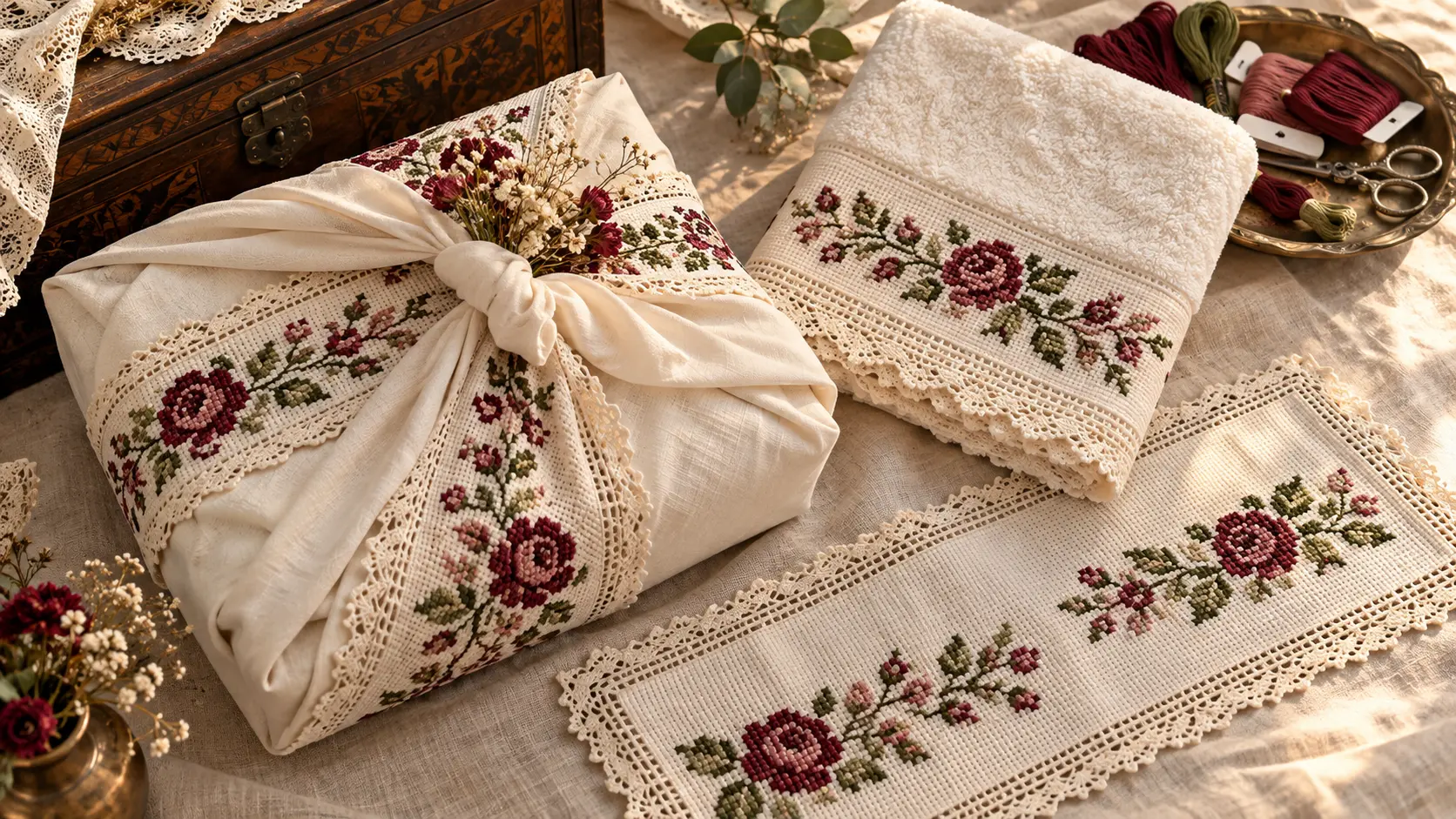
The motif catches the eye first. A closer look at an etamin piece made for a trousseau reveals its dimensions, fabric, stitches and the decisions of its maker. A piece prepared for marriage may later enter daily use, remain a family keepsake or become part of a new home's decor. “Trousseau” therefore describes a context, not a single kind of product.
The place of cross-stitch in trousseau traditions
Research documents cross-stitch embroidery in Anatolian trousseau traditions, including bedding and other home textiles. Cross-stitched prayer mats studied in Gemerek, Sivas, are specific examples prepared as trousseau items. Yet trousseaux differ by place and family. This article is not a mandatory shopping list.
Older pieces may show patterns taught within a family, copied from design books or altered by their makers. If a piece has a known history, recording it is valuable. If its history is unknown, claims such as “centuries-old motif” or a supposedly definite traditional meaning should be avoided. A thoughtful account of trousseau culture can value its craftsmanship while respecting different choices about marriage and home life.
What kinds of etamin pieces can be prepared for a trousseau?
Wrapping cloths and keepsake covers
A wrapping cloth, or bohça in Turkish, can hold or present other pieces. In an embroidered cloth, the position of the design, the way it folds and the edges all matter. Photos of corners and the reverse are as useful as a picture of the front.
Towels and bathroom textiles
On a hand or face towel, the width of the embroidery band, the towel's absorbency and the care needs of the thread should be considered together. A decorative towel kept for display and a towel intended for frequent washing call for different decisions.
Table and home textiles
Tablecloths, table runners, napkins and cushion covers can be used well beyond the wedding period. Table dimensions, the space available for the motif and the room's colours matter. Coordinated pieces do not have to share an identical colour; a consistent design language can link them.
Prayer mats
A cross-stitched prayer mat belongs to some trousseaux. If it will be used for worship, discuss how the density and placement of its embroidery affect comfort, as well as the fabric's stability and care. See the etamin prayer mat guide for more detail.
Keepsakes and decorative pieces
A framed work with a name, date or family-inspired motif offers a contemporary interpretation. For personalised work, confirm spelling, date format, colours and pattern placement before production starts.
How should a motif be chosen?
Flowers, birds, geometric borders and other figures can appear in different compositions across regions and makers. Instead of assuming a universal symbolic meaning, ask: Who is making the piece? What object will carry the motif? Does the maker or family attach a particular story to it? A study of deer motifs in cross-stitch shows that motifs may carry cultural associations in specific contexts; it does not make every deer pattern tell the same story.
For an item that will be used regularly, light colours can show stains more readily; with darker threads it may help to ask about colourfastness. A large design can overwhelm a small towel, while a narrow border may disappear on a broad tablecloth. A placement sketch can prevent disappointment.
Checklist before commissioning an etamin piece
- Name every item: Is it a wrapping cloth, towel, cover or prayer mat? List each part of a set.
- Agree on dimensions: Confirm width, length, set contents and edge allowance where relevant.
- Ask about fabric and thread: Note the ground, embroidery technique, thread content and any lining.
- Approve the design: Confirm colours, motif, names or dates and their exact placement.
- Explain how it will be used: Daily use, occasional display and long-term storage can call for different materials.
- Request care instructions: Washing, drying, ironing and storage advice must fit the actual piece.
- Discuss timing and delivery: Agree on preparation time, packaging and handover directly with the maker.
Keeping a piece for future generations
Store clean, completely dry pieces away from dampness. For long-term storage, consider changing fold lines from time to time and avoiding heavy pressure. Seek specialist advice before cleaning fragile or older textiles. A note with the maker's name, year and known story can preserve the context of an inherited piece.
Frequently asked questions
Is “trousseau etamin” a separate embroidery technique? No. “Trousseau” describes the intended use or cultural context. Cross-stitch is a common technique on etamin, but the actual technique should be identified for each product.
What belongs in an etamin trousseau set? There is no fixed set. Wrapping cloths, towels, covers and prayer mats may be made individually or together. A listing should identify every included piece.
Can these items be used every day? That depends on their fabric, the position of the embroidery and the finish. Tell the maker if you expect daily use and ask for product-specific care advice.
Do they have to use traditional motifs? No. A family motif, a maker's original design or a restrained contemporary pattern can all be appropriate.
A meaningful trousseau piece starts with the life and preferences of the person who will use it, not with a compulsory list. Discover the type of handmade work on Tospika and discuss the details directly with its maker.