Fabric Painting with Antep-Inspired Motifs: From Tradition to Contemporary Design
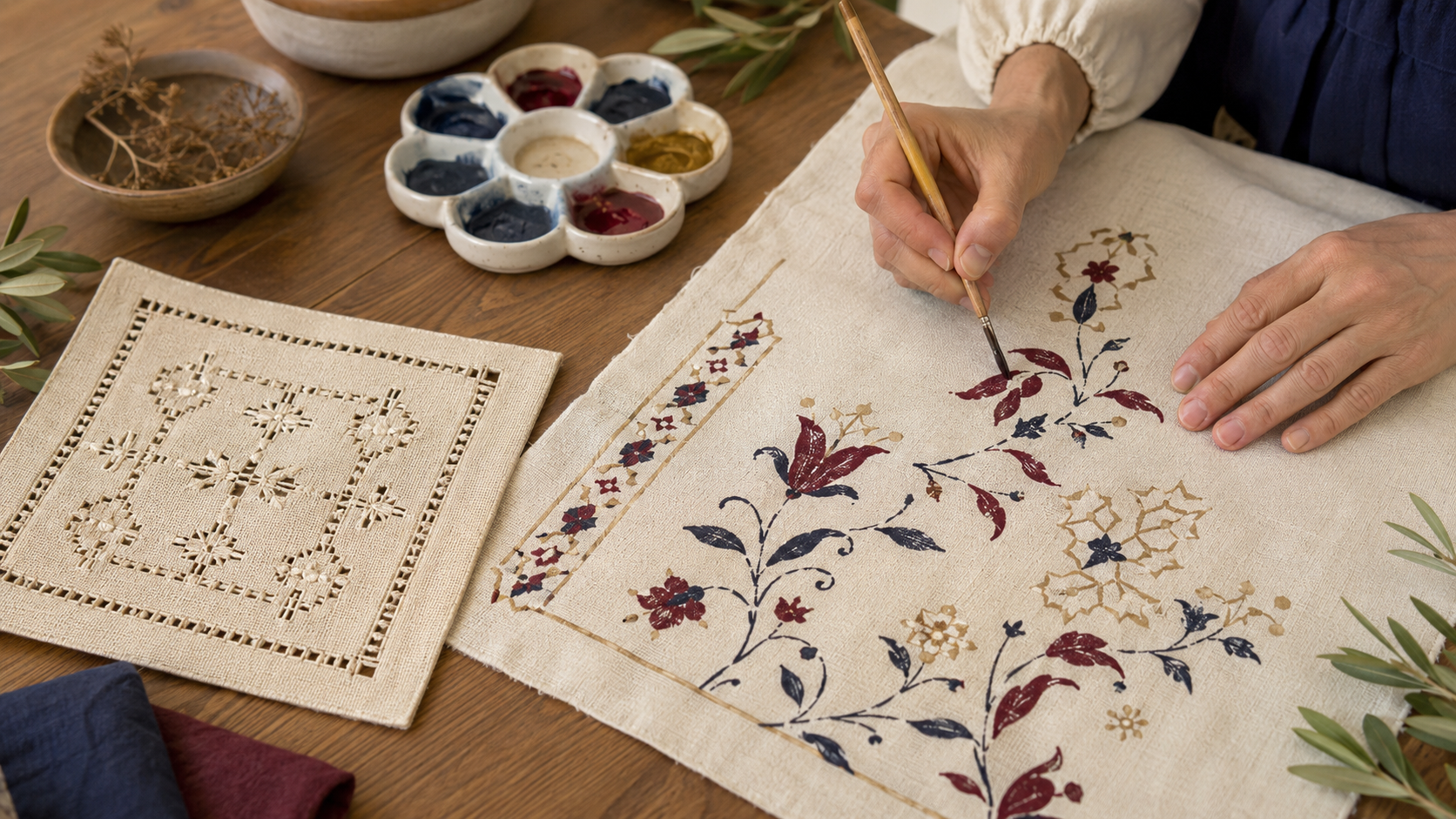
Reinterpreting a traditional pattern through a new technique can create a conversation between heritage and contemporary design. In fabric painting inspired by Antep embroidery, the rhythm, geometry and nature-derived forms of openwork needlework are translated through brushes, colour and the surface of cloth.
One distinction is essential: traditional Antep embroidery is not a fabric-painting method. It is made by counting and withdrawing selected fabric threads, then wrapping and connecting the remaining structure with needle and thread. In hand-painted textiles, the design is applied to the surface with suitable textile paints. An accurate description is therefore “hand-painted fabric inspired by Antep embroidery motifs.”
How is a traditional motif adapted?
A thoughtful interpretation begins by studying more than the outline of an old motif. The maker considers repetition, symmetry, the balance of open and solid areas, and the role of borders. These principles are then rescaled for the intended object.
A long border may suit a table runner, while a central composition can create balance on a cushion. On a bag, the position of handles and seams becomes part of the design. The motif then belongs to the object rather than appearing as a decoration added at the end.
Why fabric choice matters
Natural fibres such as cotton and linen are commonly selected for hand painting. Texture affects how paint moves and how brushwork appears. A very loose weave can make control difficult, whereas a heavily finished surface may prevent paint from bonding effectively.
Pre-washing the fabric, using paint formulated for textiles and heat-setting it according to the paint manufacturer’s instructions can improve durability. Since fabrics and paints vary, care guidance should always be specific to the finished item.
The value of the maker’s hand
The beauty of a hand-painted textile does not come from every motif looking mechanically identical. Small differences in brush pressure, tone and line reveal the human process. They are not defects; they are evidence of authorship.
Transparent language also matters. If an item was not produced with the registered openwork embroidery technique, it should not be presented as authentic Antep İşi. Phrases such as “Antep-inspired,” “inspired by Gaziantep textile motifs” or “a contemporary fabric-painting interpretation of traditional aesthetics” communicate the connection without confusing two different techniques.
Why the woman maker’s interpretation matters
Traditional crafts are not static museum objects. Heritage remains alive when makers understand visual language and adapt it through new colours, functions and personal expression. Naming the source accurately, explaining the method and identifying the maker make the contemporary object more—not less—valuable.
When exploring hand-painted textiles on Tospika, look for details about fabric content, paint, fixing method and care. You can also contact the maker directly to learn how the design was created.