
Antep Embroidery: A Living Heritage from the 1850s to Today
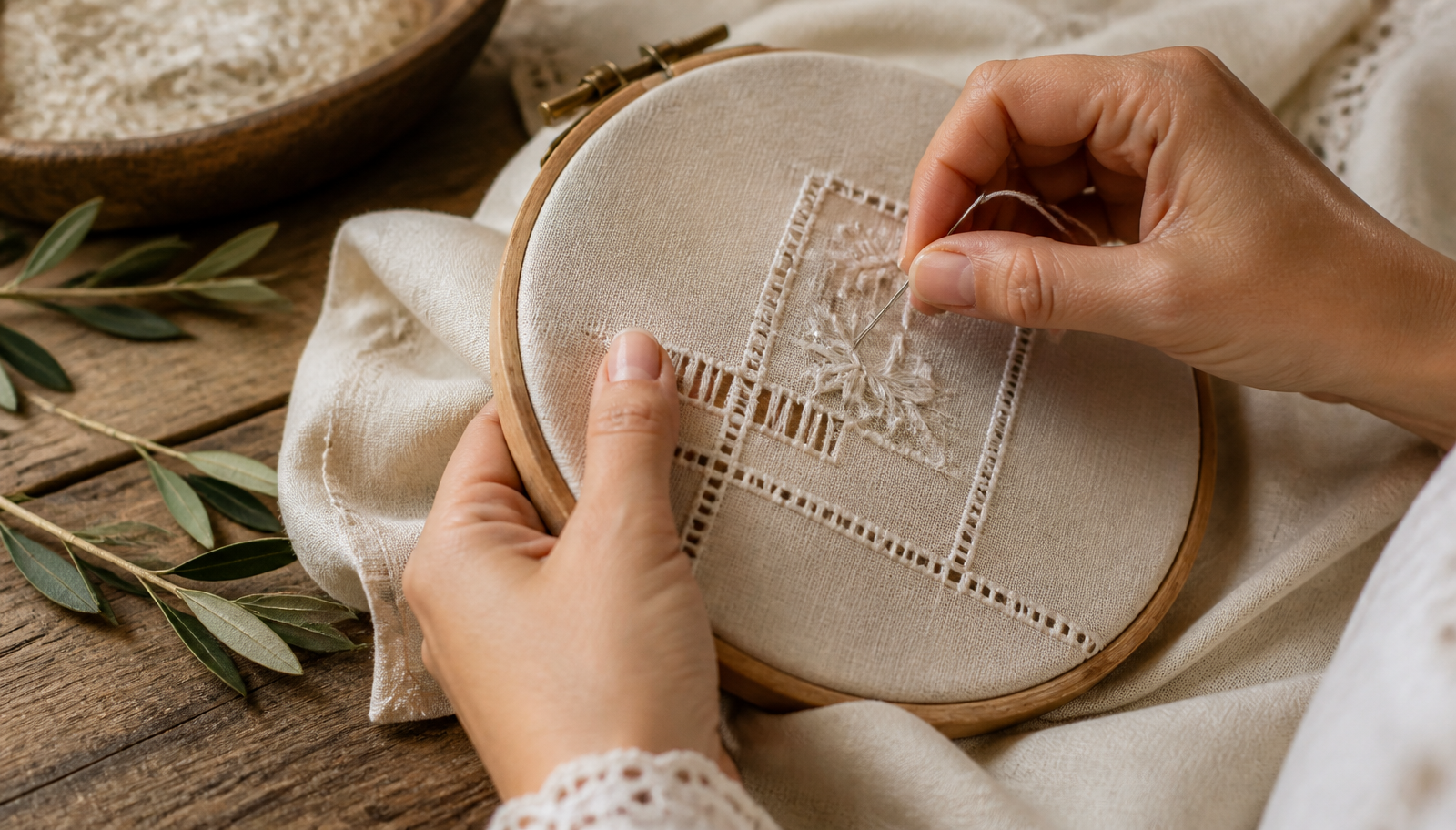
Antep embroidery is a textile tradition associated with Gaziantep in southeastern Türkiye. Its delicate openwork may resemble lace at first sight, but the pattern is constructed within the fabric itself. The artisan counts the woven threads, carefully removes selected ones and wraps or interlaces the remaining structure with silk or cotton thread.
How old is Antep embroidery?
Its precise origin is unknown. According to Türkiye’s Ministry of Culture and Tourism, motifs found on men’s traditional headwear in Gaziantep villages were being adapted to finer urban fabrics in the 1850s. Its documented story therefore reaches at least as far back as the mid-nineteenth century.
Over time, the technique appeared on clothing, dowry textiles, handkerchiefs, shawls, curtains and table linens. It was practised predominantly by women and passed from one generation to another, turning the domestic workspace into a place where skill, memory and social knowledge could be shared.
What makes the technique distinctive?
Antep embroidery begins with a tightly woven fabric whose threads can be counted and withdrawn. Selected warp or weft threads are removed. The remaining threads are then wrapped, connected and shaped through different needle techniques, producing a durable geometric openwork structure.
Poplin, batiste and locally known kahke cloth were used historically. Contemporary makers may also work with linen, silk, kutnu and other woven textiles. Antique-style examples usually combine white or cream fabric with white, yellow or cream thread. Colourful Antep embroidery extends the same tradition through more varied palettes.
A vocabulary of motifs and openwork
Designs may draw on plants, geometry and, occasionally, human or animal figures. The balance between solid cloth and open space is central to the composition. Openwork patterns carry evocative names such as mercimek, ciğerdeldi, örümcek, kartopu, çitime and badem. Techniques known as susma and muşabak add further surface and structural variation.
Why geographical indication matters
Antep İşi was registered in Türkiye as a protected geographical indication—a mahreç işareti—on 6 December 2016. The registration recognises that the name describes more than a visual style: it refers to a regional craft defined by particular materials, processes and production knowledge.
For this reason, not every openwork textile or hand-painted fabric inspired by Antep motifs should be sold as authentic Antep embroidery. Contemporary interpretations can be meaningful and beautiful, but transparent naming protects both the artisan and the buyer.
Women’s craftsmanship carried into the future
The future of Antep embroidery depends not only on preserving historic pieces but also on supporting the women who hold and transmit the knowledge. Some makers continue the registered embroidery practice; others reinterpret its balance, rhythm and motifs through contemporary textile arts. When each technique is described accurately, both approaches can help cultural memory reach new audiences.
On Tospika, you can discover handmade textile pieces and contact their makers directly to learn about the technique, materials and story behind each work.