Category
Punch Needle Wall Decor
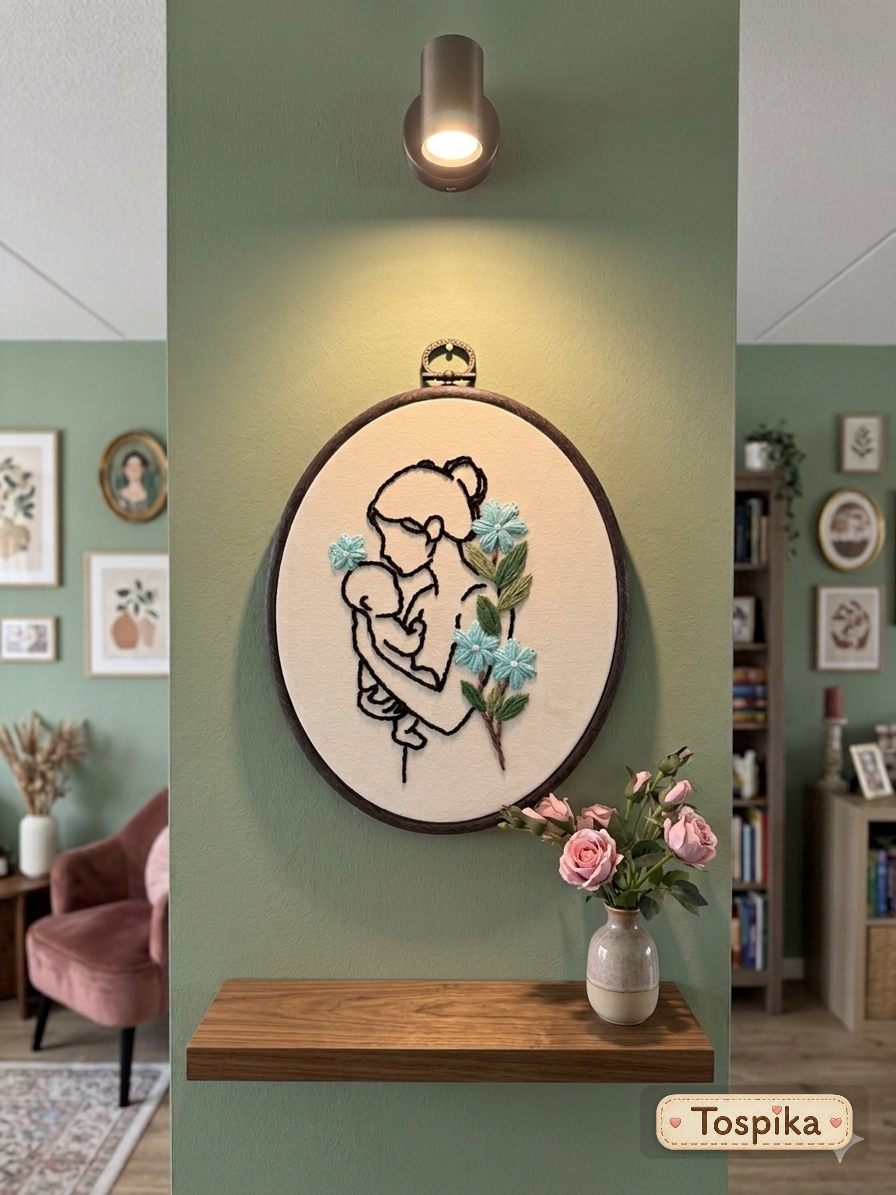
Punch Needle Wall Decor uses looped yarn to add relief, pattern, and a tactile surface to an interior. Makers commonly work on monk’s cloth, tightly woven cotton, linen blends, or fabric designed specifically for punch needle. Wool gives a dense, warm finish, while cotton can produce cleaner detail and acrylic yarn offers a broad range of colours. The cloth is stretched in a hoop or frame during production, and the finished piece may remain in a wooden hoop, sit in a conventional frame, or be mounted with a felt-covered back.
Typical designs include botanical shapes, animals, lettering, geometric compositions, landscapes, and playful motifs for nurseries. Small round pieces can fill a narrow section of wall or complement shelves, while larger rectangular panels work well above a desk, console, or reading chair. Sets can be arranged as a compact gallery, provided that spacing and hanging height are planned first. When comparing Punch Needle Wall Decor, consider the pile height and yarn finish as well as colour; a deep loop creates stronger shadows, whereas a shorter pile has a flatter, more graphic appearance.
Check whether the stated size refers to the textile area or the full outer dimensions of the hoop or frame. Frame depth also matters near doors, curtains, and frequently used walkways. For routine care, remove dust gently with a soft clean brush or a vacuum attachment set to low suction without pressing against the loops. Unless the maker provides washing instructions, avoid soaking or machine washing. Keep the work away from prolonged direct sunlight, high humidity, cooking vapour, and objects that may snag the yarn. Minor variations in colour, dimensions, and texture are a natural feature of handmade work.
Tospika is a showcase for independent makers rather than an online shop, so no sale is completed on the platform. Contact the maker directly to ask about ordering, current availability, custom dimensions, alternative colours, mounting details, and estimated delivery time. If scale or texture is difficult to judge from photographs, request the overall measurements, yarn composition, backing method, and care guidance before deciding.